
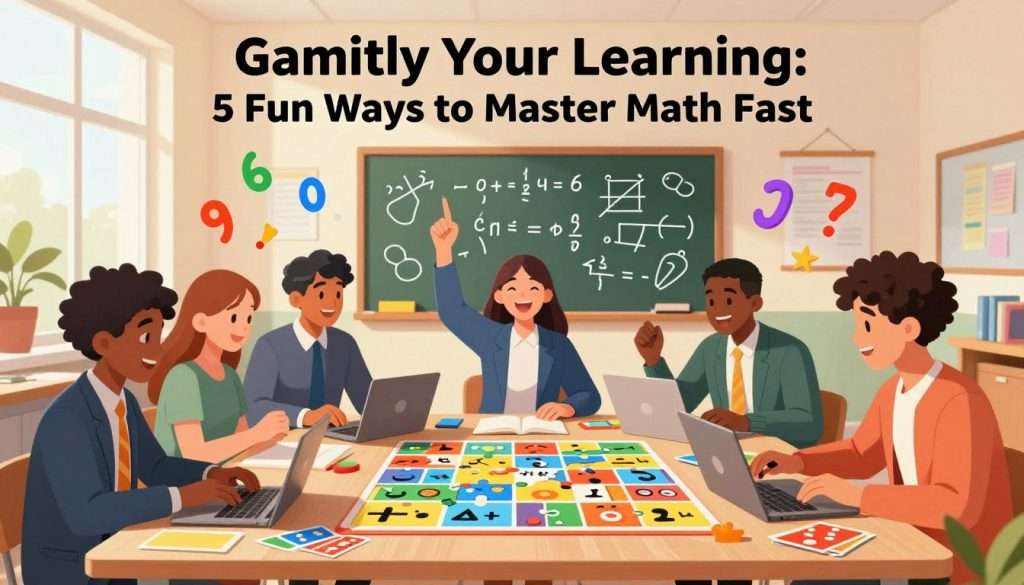
Does a pile of worksheets make you want to hide? You are not alone. Many students see number practice as a chore, but it need not feel like a long marathon. Add play, and you can transform every spare moment into useful practice.
When you gamify your learning: 5 fun ways to master math fast, equations feel less like obstacles. You explore patterns, operations, and logical decisions like a favorite video game. This method makes study time an engaging adventure that fits your busy schedule.
This guide presents five simple strategies to build confidence. You will learn to use points and levels, focused games, quests, friendly challenges, and streaks with spaced review. Whether you are a beginner or a pro, you can adapt this practical system to fit your style and goals.
Key Takeaways
- Turn boring practice sessions into exciting, game-like experiences.
- Use points and levels to track your progress and stay motivated.
- Apply focused games to sharpen specific skills during short breaks.
- Engage in friendly challenges to build confidence with peers.
- Implement streaks and spaced review to ensure long-term retention.
Why Learning Through Gamification Makes Math Stick
Learning through gamification turns math struggles into wins you want to chase. Interactive study sessions make math feel like levels you can master.
This approach works because it uses our natural desire for clear goals and visible progress. Complex topics become smaller tasks, so each step builds momentum.
How play increases motivation and practice time
Many students avoid math because it feels repetitive and dry. Play shifts attention from fear of wrong answers to excitement about the next milestone.
This is not mindless button-pressing or endless speed drills. It creates a meaningful loop of effort and reward. You naturally spend more time practicing because the process feels rewarding, not draining.
- Clear objectives keep your brain focused on the task.
- Visible progress provides a sense of accomplishment.
- Meaningful choices give you control over your learning path.
Why immediate feedback strengthens mathematical understanding
One major math hurdle is the gap between making a mistake and noticing it. A gamified system gives you instant feedback to spot errors right away.
This quick response links abstract symbols to real quantities before confusion grows. You can adjust your strategy in real time, building a deeper understanding of how numbers work.
Balancing fun, challenge, and genuine skill development
The real magic happens at the sweet spot between enjoyment and difficulty. A game that is too easy bores you, while one too hard frustrates you.
We aim for balance that keeps you in a state of flow. This means mixing lighthearted fun with calm reflection and real mathematical thinking. The right challenge ensures each session builds your skills and keeps your confidence high.
Gamify Your Learning: 5 Fun Ways to Master Math Fast
Numbers can feel like an adventure, not a test, when you change how you study. Turn difficult equations into engaging puzzles with these five strategies for your study routine.
Turn daily practice into a points-and-levels challenge
Assign points to completed problems, corrected mistakes, and review sessions
Give each daily task a clear point value. Earn ten points for each correct problem and five for each mistake you find and fix. Reviewing your errors creates real learning, so reward that effort generously.
Use levels to move from foundational skills to mixed problems
Think of progress like a video game. Begin at “Level 1” with basic arithmetic, then unlock “Level 2” when you feel confident. This approach prevents complex topics from overwhelming you before you master the basics.
Reward consistency without rewarding rushed or careless work
Reward the habit of showing up, not speed alone. Rushing reduces your chance to build deep understanding. Give a “daily streak” bonus only when accuracy stays above a set percentage.
Play math learning games that target one skill at a time
Choose games for arithmetic fluency, fractions, algebra, geometry, or probability
Many educational games for math skills focus on one topic at a time. Use dice for place value or cards to compare fractions. A narrow focus helps you master each concept.
Use timed rounds to build speed while preserving accuracy
A little pressure can make practice fun. Set a timer and solve as many problems as possible in three minutes, while protecting accuracy. Speed matters, but accuracy is the foundation of true fluency.
Review missed questions instead of treating the game as the final goal
If you lose a round, do not move on too quickly. Treat each missed question as a “boss battle.” Analyze the error, then try again until you get the answer right.
Challenge yourself with quests, puzzles, and real-world missions
Design multi-step challenges using shopping, sports, travel, or budgeting scenarios
Math appears throughout daily life. Create a mission that calculates a grocery trip’s total cost or finds the best route using fuel efficiency. These practical missions make abstract numbers useful and real.
Break difficult problems into unlockable clues and smaller objectives
When a problem feels too large, break it into smaller steps. Treat each step as an “unlockable clue” toward the final answer. This method reduces frustration and keeps your momentum going.
Use puzzle-solving to practice reasoning rather than memorization alone
Focus on the “why” behind each problem. Solving a logic puzzle trains critical thinking, not just memory. This works better than memorizing formulas you may later forget.
Compete with friends, classmates, or your past performance
Set up cooperative math challenges that encourage explanation and teamwork
Learning often improves when people share ideas. Solve a complex problem with a friend, taking turns to explain each step. Teaching someone else is the fastest way to solidify your own knowledge.
Use personal bests when competition creates stress or discouragement
If competition feels intense, compete against yourself. Track your “personal best” scores and try to beat them each week. This keeps attention on your growth instead of comparisons.
Make every player explain the strategy behind a correct answer
A correct answer is not enough. To win, explain your strategy clearly. This proves you understand the process instead of guessing.
Build a streak system that includes spaced review
Schedule short practice sessions across several days
Consistency beats intensity. Choose short, daily sessions instead of cramming for hours. Regular practice helps your brain retain information over time.
Mix new material with older problems to improve long-term retention
Keep old skills from getting rusty. Add a few problems from last week to today’s practice. This “spaced review” keeps your math skills sharp.
Protect the habit with realistic streak rules and recovery days
Life happens, so breaks are okay. Add “recovery days” to your streak system after missed days. The goal is a sustainable habit that lasts months, not just days.
Build a Personalized Math Game You Can Actually Finish
Why wait for a pre-made app when you can build your own math adventure? Creating interactive math activities for your needs keeps you engaged. When you design the rules, you control your learning journey.
Choose one measurable target for the next seven days
Focus is your greatest asset. Instead of mastering everything at once, choose one skill to improve this week. Whether it is mastering long division or memorizing prime numbers, keep your goal crystal clear.
- Write your goal on a sticky note.
- Keep it visible on your desk.
- Track your progress daily.
Set a difficulty range that feels challenging but achievable
Avoid the “cliff climb” effect, where every problem feels impossible. Aim for a sweet spot with about 80% correct answers. This balance keeps you motivated without causing needless frustration.
Prepare question cards, a score sheet, a timer, or a digital tracker
Gathering simple materials makes practice feel like a real game. You do not need fancy software to create effective interactive math activities. A simple timer set for ten minutes can turn a standard worksheet into a high-stakes sprint.
| Tool | Purpose | Benefit |
|---|---|---|
| Timer | Pacing | Builds speed |
| Score Sheet | Tracking | Visual progress |
| Question Cards | Variety | Randomized practice |
End every session with a brief error review
Do not let your hard work disappear into a cloud of confetti. Take two minutes after each round to review what went wrong. Learning from mistakes is the secret sauce that turns a simple game into a powerful study tool.
Use Educational Technology for More Interactive Math Practice
If math feels like a chore, choose digital tools that make practice more engaging. Used wisely, math learning games offer visual feedback and flexible practice for tricky concepts. Choose platforms that coach your thinking instead of showing only a digital answer.
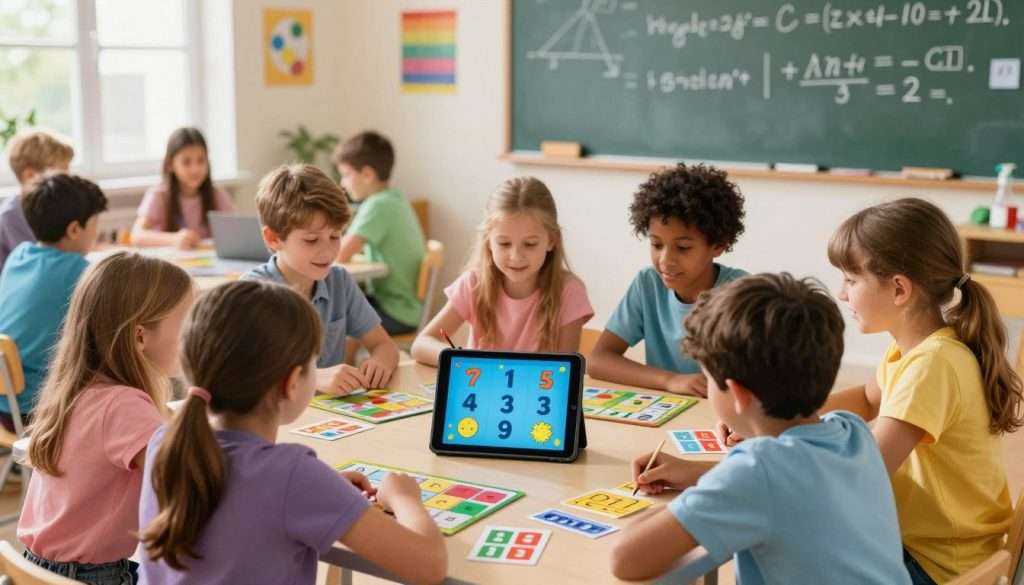
Select platforms that provide explanations instead of answers only
Many apps show a green checkmark when you solve a problem correctly. Real growth comes from understanding why a solution works. Choose platforms with step-by-step explanations or interactive hints that guide your thinking.
Use virtual manipulatives for fractions, equations, and geometry
Seeing math in action can help ideas stick. Tools such as ST Math and Toy Theater provide virtual manipulatives for shapes and numbers. You can slide, rotate, and stack them to explore abstract concepts like fractions and geometric proofs without physical blocks.
Combine apps with handwritten work to strengthen problem-solving habits
Digital tools help, but they should not replace pencil and paper. Use apps such as DragonBox or Monster Math to spark interest, but keep a notebook nearby. Writing equations by hand helps you internalize logic and slow down, preventing careless errors.
Protect attention by limiting notifications and unnecessary screen switching
Your brain needs focus for complex problems. Before each session, turn off all non-essential notifications on your device. Use one platform at a time to avoid the “tab-switching” trap that harms concentration.
| Tool Name | Primary Focus | Best For |
|---|---|---|
| ST Math | Visual Logic | Conceptual Understanding |
| DragonBox | Algebraic Thinking | Building Foundations |
| Monster Math | Arithmetic Fluency | Speed and Accuracy |
| Toy Theater | Virtual Manipulatives | Geometry and Fractions |
The best math learning games encourage screen-free reflection breaks. Step away from the device every twenty minutes to consider the strategies you used. This habit turns passive screen time into active, meaningful learning.
Turn Progress Tracking Into a Smarter Study Routine
Making your study sessions data-driven can help you master complex topics. Many students focus on a final score, but real growth appears in small signs of progress. With engaging math learning techniques, studying becomes a rewarding game of personal discovery.
Track accuracy, completion time, confidence, and recurring mistakes
To understand your progress, record more than whether each answer is correct. Log your accuracy, solving time, and confidence during each problem. When the same errors appear, write them down at once.
“What gets measured gets managed.”
Use a simple progress dashboard to identify weak skills
You do not need fancy software to stay on track. A notebook or digital spreadsheet can serve as a simple dashboard for your progress. It helps you spot patterns and focus your effort where it matters most.
Metric Why It Matters Goal Accuracy Shows core understanding 90% or higher Speed Builds mental fluency Consistent pacing Confidence Tracks emotional growth High self-assurance Convert mistakes into targeted mini-challenges
When you find three to five recurring trouble spots, make specific mini-challenges for your next session. Do not feel discouraged by a wrong answer; treat it as a valuable data point. These focused practice rounds are among the most engaging math learning techniques because they create a clear path forward.
Increase difficulty only after understanding is stable
Harder problems can feel tempting, but speed cannot replace mastery. A faster wrong answer is still wrong, just wearing a different hat. Wait until your current level feels stable and easy before raising the challenge.
Match Each Game to the Math Skill You Need
Finding the right match between a game and your math goal is a game-changer for studying. Instead of grabbing the flashiest app on the shelf, seek innovative learning methods that target the skill you need. When a game fits the skill, your brain can learn faster.
Use speed games for multiplication and basic arithmetic fluency
If you want to sharpen mental math, choose games that reward quick thinking. Fast card games and digital timers build automaticity with multiplication tables and addition. They turn repeated drills into an exciting race against the clock.
Use sorting and matching activities for fractions, decimals, and percentages
Fractions and decimals can feel abstract until you see them in action. Use sorting games to group equivalent values or match visual representations to numerical forms. This hands-on approach makes these tricky ideas more concrete.
Use strategy games for logic, probability, and mathematical reasoning
To master probability or complex logic, play board or card games that require planning. These innovative learning methods make you predict outcomes and weigh risks carefully. You are not just solving for X; you are learning to think like a mathematician.
Use visual construction tasks for geometry and spatial thinking
Geometry explores shapes and how they fit together in space. Use physical blocks, puzzles, or digital construction tools to build structures with specific measurements. Seeing math in 3D helps you understand spatial relationships better than a textbook can.
Use scenario-based challenges for algebra and practical problem-solving
Algebra is easier to understand when it comes in a story. Choose games with a “treasure map” or real-world mission, where you must solve equations to unlock the next step. Applying your skills to a meaningful scenario can make the math’s logic finally click.
Avoid Common Mistakes When You Gamify Your Learning
Even the best educational technology for math mastery can distract you when learning is no longer the focus. High scores and flashy badges may hide weak progress, so keep study time productive and meaningful. Do not turn study time into a race to the finish line.
Do not confuse fast answers with deep mathematical understanding
Speed is often rewarded in games, but math needs thoughtful reflection. Clicking too fast may make you rely on intuition instead of logic. Prioritize “why” an equation works over solving it quickly.
Avoid rewards that encourage guessing, shortcuts, or answer memorization
Points for every correct click can encourage guessing to keep a streak alive. This habit blocks learning the underlying concepts. Rather than chasing external rewards, try to compete against your own personal best to keep your brain engaged.
Prevent overly difficult challenges from damaging confidence
If a game feels impossible, you may lose interest or feel discouraged. Choose a difficulty range that offers a healthy stretch, not a wall. If confidence slips, step back and choose a level that lets you practice with ease.
Keep entertainment from replacing deliberate practice and correction
Sometimes, the game becomes so fun that you forget to review mistakes. Deliberate practice means pausing to understand why you got a problem wrong. Take short reflection breaks to analyze errors; this is where the most significant learning happens.
Adjust the system when the game stops supporting learning
Educational technology for math mastery should support learning, but no tool works forever. If entertainment becomes louder than educational value, change your approach. Retire a game or modify its rules when it stops helping you reach your math goals.
Want to Go Deeper?
If you enjoy turning study sessions into games, you are on the right path toward mastering complex topics. Motivation matters, but the right tools can make your journey smoother. You deserve a system that works as hard as you do.
Discover a practical system for learning math more effectively
We created a practical guide to help you improve your approach. With proven math study strategies, you can change how you process numbers and logic. The goal is not harder work, but smarter work that helps you succeed.
Explore How to Think Like a Mathematician for proven memory techniques, smarter study routines, and thinking strategies that help knowledge stick for the long term
Our guide, How to Think Like a Mathematician, helps you build strong long-term math retention. It covers memory hacks and daily habits that keep your brain sharp. You will find clear, useful advice to move past frustration and reach true understanding.
Emphasize that the book is free with no cost and no catch
We believe quality education should be accessible to everyone. That is why we offer this free math learning book without hidden fees or strings attached. It shares methods that have helped many others succeed.
Invite readers to get a free copy at https://www.studyingmachine.com/free-books/
Are you ready to take your skills to the next level? Get your copy today and start using these techniques right away. Visit https://www.studyingmachine.com/free-books/ to download your guide and begin your journey toward mastery.
| Feature | Traditional Study | Our System |
|---|---|---|
| Retention Method | Rote Memorization | Active Recall |
| Study Routine | Cramming Sessions | Spaced Practice |
| Goal Focus | Passing Tests | Deep Understanding |
| Cost | Expensive Tutors | Free Resources |
Conclusion
You hold the power to change how you view numbers. By blending playful challenges with careful review, you turn a tough subject into small, satisfying victories. Use the five core pillars we explored: points and levels track growth, while games target skills.
Create quests that keep you moving forward.
Compare your current performance with your past self to see real progress. Build realistic streaks with time for spaced review. Start your journey today with one measurable seven-day goal.
Dedicate just five to ten minutes each day to practice. Always review your mistakes after every session.
Math does not have to feel like a locked door. It is a trail of puzzles waiting for you to solve. Stay curious and keep playing with the concepts.
You will find that consistent, fun practice makes even the hardest problems feel manageable. Grab your timer and start your first quest right now.