
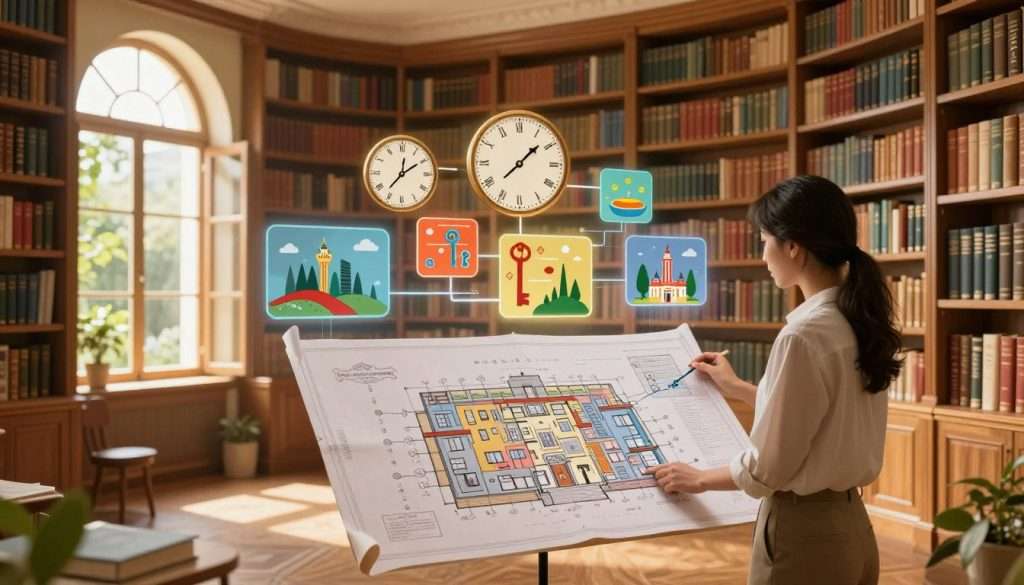
Have you ever wished for a filing system that truly worked? Many people stare at notes and still feel that nothing sticks. Learning how to create a memory palace turns that frustration into a fun, creative game.
You link facts to familiar rooms, turning abstract data into vivid mental snapshots that last.
The secret is active practice. Reading about these methods helps, but you must build your own mental space for real results. Start small with a familiar room, and watch your recall improve.
My free book How to Become the Smartest Student in the Classroom offers a full roadmap for success.
You can grab your copy at this link with no strings attached.
Key Takeaways
- Memory palaces use spatial visualization to boost long-term retention.
- Connecting new information to familiar locations makes recall effortless.
- Active engagement is essential for mastering these mental techniques.
- Start with a simple, well-known room to build your confidence.
- Consistency in practice leads to faster and more reliable learning.
What a Memory Palace Is and Why It Works
Have you wondered why you can recall your childhood home but struggle with a simple grocery list? Your brain naturally remembers locations better than abstract data. The memory palace technique turns this ability into a powerful learning tool.
How the Memory Palace Technique Connects Information to Familiar Places
Think of a memory palace as a mental map of a place you know well. It could be your apartment, your school, or your favorite walking route. Placing information in these familiar spaces gives your brain a spatial anchor.
Rather than memorizing dry facts, take a mental walk through your chosen location. Picture the information sitting on your couch or hanging on your wall. Retrieval then feels like a natural stroll instead of a stressful test.
Why Visual Images Are Easier to Recall Than Abstract Facts
Our brains do not store long strings of text or numbers easily. We are visual creatures who respond well to vivid imagery and sensory details. Turning a boring fact into a strange or funny picture helps your brain remember it faster.
- Visuals: Your brain processes images thousands of times faster than text.
- Emotion: Adding humor or surprise makes the memory stickier.
- Interaction: Seeing an object “do” something in your room creates a stronger neural path.
When a Memory Palace Is Most Useful for School, Work, and Everyday Life
This method works in almost any situation where you need to retain information. Whether you prepare for a big exam or remember a presentation, the memory palace technique keeps your thoughts organized.
To explore these systems, my free book How to Become the Smartest Student in the Classroom offers a full system of study routines that stick. You can grab your free copy here at no cost.
Choosing the Right Amount of Information for One Palace
Cramming too much into one location is a common mistake. Think of your memory palace like a backpack; overstuffing it makes items hard to find. Start with a small, manageable set of facts to keep your mental space clear and organized.
How to Create a Memory Palace: Choose Your First Familiar Location
You do not need a mansion to build your mental library. You only need a place you know well and visit daily. This beginners guide memory palace approach uses familiar spaces and saves mental energy for learning instead of navigation.
Pick a Place You Can Picture Without Looking at a Map
The best locations are easy to picture with your eyes closed. If you struggle to recall the couch or door swing, that location is not ready. Choose a space that feels effortless to walk through in your mind.
Compare Your Home, School, Workplace, and Regular Walking Route
Most people find their own home the perfect starting point. You know every corner, shelf, and doorway by heart. If your home feels too small, consider your daily commute or favorite classroom.
A familiar park path can also serve as a powerful beginners guide memory palace tool when you know its landmarks.
Use a Location With a Clear Beginning and Ending Point
A good route needs a logical flow. Start at the front door and end in a specific room, such as your bedroom or kitchen. This linear path keeps you from getting lost while recalling information later.
Why Familiarity Matters More Than Size or Complexity
Many beginners worry that their apartment is too small to hold enough information. In reality, a small space is often easier to manage. Familiarity is the secret ingredient that makes this technique work, not the building’s square footage.
Avoiding Locations With Too Many Similar or Distracting Areas
Try to avoid places that look identical in every room, such as a long hotel hallway or generic office building. If every stop looks the same, your brain will struggle to tell them apart. Choose unique, distinct areas to keep mental images sharp and clear.
If this article resonated with you, my free book How to Become the Smartest Student in the Classroom gives you a full system. It covers memory techniques, study routines, and strategies that actually stick. There is no cost or catch; grab your free copy here.
Map a Reliable Route Through Your Memory Palace
Building a consistent path is the most important step for any memory palace for beginners. Without a clear, logical flow, your mental journey can become confusing and frustrating.
Treat your route like a well-worn trail in the woods. Wandering off it can make you lose your way, so build a sturdy mental map.
Start at One Consistent Entry Point
Begin your journey at the exact same spot every time. It may be your front door or your favorite coffee shop entrance. Consistency is key to success.
Entering from the same direction trains your brain to follow a predictable sequence. This keeps you from starting in the middle of a room.
List Distinct Stops in a Natural Order
After choosing your entrance, move through the space in a natural way. Most people prefer moving clockwise or following a hallway.
Do not jump across the room randomly. Keep your stops in a logical order, so your brain can move smoothly between them.
Create Ten to Twenty Fixed Loci for Your First Practice Palace
For your first palace, choose ten to twenty fixed locations, also called loci. These specific “hooks” hold the information you want to remember.
Using Doors, Furniture, Signs, and Corners as Memory Stops
You can use almost anything as a stop, but some choices work better. Doors, large furniture, wall signs, and room corners stand out and are easy to picture.
Preventing Route Reversals and Skipped Locations
To avoid skipped stops, keep your path simple and do not cross your own tracks. If you reverse direction, simplify your route to keep it linear.
| Locus Type | Why It Works | Best For |
|---|---|---|
| Furniture | High visual impact | Large concepts |
| Doorways | Clear transition points | New topics |
| Wall Signs | Easy to read | Key definitions |
Test the Route Before Adding Any Information
Before memorizing any fact, walk through your empty palace several times. Close your eyes and picture each stop in order. This practice helps you remember the sequence.
If this process helps, check out my free book, How to Become the Smartest Student in the Classroom. It offers a full system of memory techniques and study routines that stick. Get your free copy here → https://www.studyingmachine.com/free-books/.
Turn Facts Into Vivid Mental Images
Your memory palace strategy turns boring facts into wild, unforgettable scenes. Turn dry text into a mental movie that demands attention. Use your senses to make information stick.
Convert Abstract Ideas Into Concrete Objects
Abstract concepts are hard to remember because they lack physical form. To fix this, you must translate them into tangible objects. For example, picture “justice” as giant, glowing scales tipping over in your living room.
Make Each Image Strange, Emotional, Colorful, or Active
Your brain naturally ignores ordinary things, so make each image bizarre. Funny, gross, or emotional images give your memory a stronger hook. Add bright colors or strange movements so the scene stands out from daily thoughts.
Use Exaggerated Size, Motion, Sound, and Humor to Strengthen Recall
Do not be afraid to go over the top with your mental images. A tiny, quiet object is easy to forget, but a massive, screaming, neon-colored version cannot be ignored.
Creating Images for Names, Numbers, Definitions, and Lists
For names, connect them with a famous person or a funny rhyme. For numbers, turn them into shapes or objects that resemble digits. This technique keeps your brain engaged and makes learning feel like a game.
Keeping One Main Image Focused on One Key Idea
It is tempting to pack too much into one spot, but simplicity is key. Focus on one clear, central image for each idea to avoid confusion. Too much detail can turn one location into a blurry mental scene.
Build Simple Associations Instead of Overloading the Scene
Keep your associations clean and direct. Create a quick, strong link between the location and information. If a scene is hard to remember, simplify it, make it weirder, and move on.
If this article resonated with you, my free book How to Become the Smartest Student in the Classroom gives you a full system. It covers memory techniques, study routines, and strategies that actually stick. There is no cost or catch; grab your free copy here.
Place Information Along the Route Step by Step
Now transform your empty mental route into a powerful storage system. With this ultimate memory palace guide, you will anchor thoughts firmly in your mind. Move along your chosen path so each detail stays where you place it.
Step One: Match the First Idea to the First Locus
Take your first piece of information and place it at your starting point. Do not merely place it; see it clearly in your mind. If your first stop is the front door, imagine your concept touching the handle or frame.
Step Two: Attach Each Following Idea to the Next Stop
After setting the first item, move to the second location on your route. Attach your next idea to this spot with equal detail. A steady rhythm keeps your thoughts from becoming a jumbled mess.
Step Three: Make Every Image Interact With Its Location
Passive images are easy to forget, so make them active and engaging. Rather than picturing an object on a table, imagine it breaking, cleaning, or changing the furniture. This interaction makes memories stick.
“Memory is the treasury and guardian of all things.” — Cicero
Example: Memorizing a Grocery List in a Kitchen
If you need to buy milk, do not just see a carton on the counter. Imagine pouring milk into your kitchen sink until it overflows and floods the floor. This strange, messy scene is harder to forget than a simple list on paper.
Example: Memorizing Study Concepts Along a Bedroom Route
When studying, attach complex terms to specific furniture. If you are learning about photosynthesis, imagine a giant plant growing from your bed and wrapping vines around your pillows. The more bizarre and vivid the interaction, the better your brain remembers the concept.
Step Four: Keep the Sequence Moving Forward
Always travel in one consistent direction through your palace. If you start at the door and move to the window, never jump back to the door. This linear flow is central to this ultimate memory palace guide.
If you want to explore these techniques, my free book How to Become the Smartest Student in the Classroom offers a complete system. It covers memory techniques, study routines, and strategies that stick. There is no cost and no catch, so grab your free copy here → https://www.studyingmachine.com/free-books/.
Strengthen Recall With Mental Walkthroughs and Review
Creating vivid images starts your journey toward total recall. Setting up your mental space feels great, but active retrieval creates lasting knowledge. The memory palace method for beginners turns mental snapshots into long-term knowledge through steady practice.
Complete an Immediate Mental Walkthrough
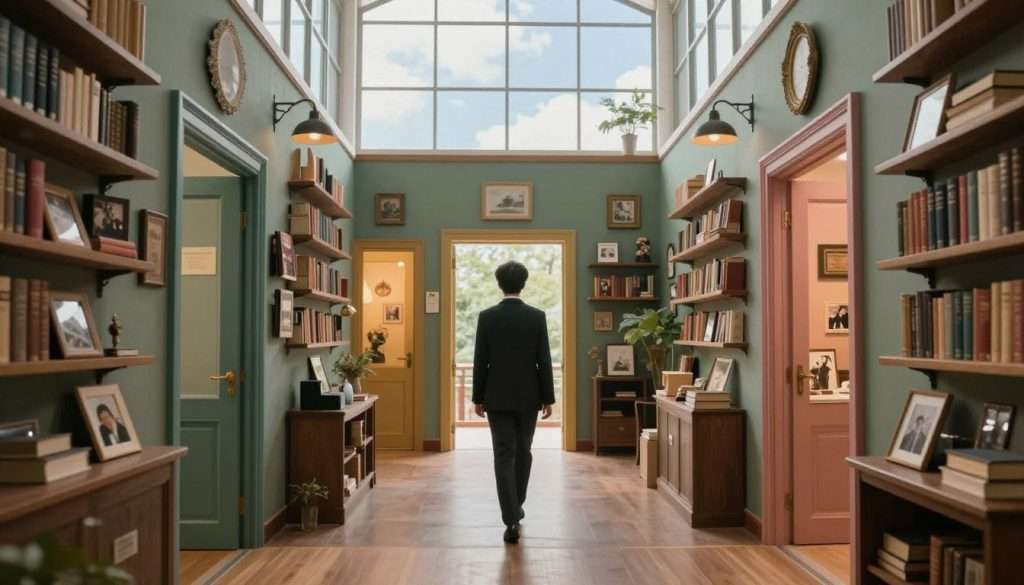
After placing your items, take a slow stroll through your palace right away. Visualize every room and object you stored there. This review strengthens connections while the images remain fresh.
Practice Forward Recall From the Starting Point
Start at your front door and follow your route in the exact planned order. If you get stuck, do not panic. Review the image at that spot, then move to the next one.
Practice Backward Recall and Random-Access Recall
To master your memory, walk your route in reverse. This makes your brain work harder and strengthens the neural pathways you built. Jump to random spots in your palace to test recall speed.
How to Find One Item Without Replaying the Entire Palace
You do not need to start at the beginning to find one fact. Instead, associate a unique landmark or room with an information category. Jump directly to that “anchor” point to retrieve needed data in seconds.
Use Spaced Review to Move Information Into Long-Term Memory
The memory palace method for beginners works best with spaced review. Information fades without review, so use a spaced review schedule. This method reviews your palace as memory starts to weaken, locking information into long-term storage.
A Practical Review Schedule for the First Day, Week, and Month
Follow this simple plan to keep your memory sharp:
- First Day: Review your palace immediately after creation and once more before you sleep.
- One Week: Take a quick walk through your palace to ensure everything is still clear.
- One Month: Perform a final check to cement the information for the long haul.
To go deeper into these techniques, read my free book, How to Become the Smartest Student in the Classroom. It costs nothing and has no catch, so grab your free copy here and take learning further.
Use the Memory Palace Strategy for Studying and Daily Tasks
Using a memory palace for studying can make everyday tasks easier. It turns your mental space into a clear filing system for information. This method works for complex academic theories and simple grocery lists.
Build a Palace for Vocabulary, Definitions, and Key Terms
When learning a language or technical jargon, a memory palace for vocabulary can help. Place an object that shows each word at a chosen stop in your house. Imagine a giant, glowing taco on your kitchen counter to remember a Spanish term for food.
Organize Lecture Notes and Textbook Concepts by Topic
Assign each major theme to a different room to break down dense textbook chapters. Walk through these mental rooms to recall information in the order your professor presented it. This keeps your thoughts organized and accessible during high-pressure exams.
Remember Speeches, Presentations, and Meeting Points
You do not need index cards for a big presentation. Place your main talking points along a familiar route, such as your morning commute. Your delivery becomes more natural and confident because you describe what you see in your mind.
Separating Multiple Subjects Into Different Palaces
Keep subjects separate so they do not overlap. Use your childhood home for history and your current apartment for biology. This mental separation prevents confusion and keeps your facts perfectly sorted.
| Task Type | Palace Location | Best For |
|---|---|---|
| Language Learning | Your Home | Vocabulary & Phrases |
| Exam Prep | School Campus | Complex Concepts |
| Public Speaking | Walking Route | Speech Flow |
Refresh or Replace a Palace When It Becomes Crowded
A location can become too full of old information. When too many mental images crowd your mind, clear the slate. You can mentally sweep the room to reset it or choose a new location for your next project.
For deeper study, my free book How to Become the Smartest Student in the Classroom gives you a full system.
It covers study routines and strategies that actually stick. There is no cost and no catch. Grab your free copy here → https://www.studyingmachine.com/free-books/.
Avoid Common Beginner Mistakes and Improve Your Technique
Even top memory masters face problems when they begin. Blurry images or changing routes are common. We can help refine your process so you can improve memory for school and beyond with confidence.
Do Not Choose a Route You Cannot Reconstruct Consistently
The biggest beginner mistake is choosing a location you do not know by heart. If you must pause to find the next room, your brain loses focus on stored information. Choose a familiar path, such as your childhood home or daily commute.
Replace Vague Images With Specific, Interactive Scenes
If mental pictures seem generic, they may fade within minutes. Instead of imagining a boring “book,” picture a giant, neon-colored encyclopedia leaking sticky honey across your floor. Specific, emotional, and strange images are harder for your brain to ignore.
Limit the Number of Ideas Placed at Each Stop
Cramming too much into one spot can create mental clutter. Keep each location simple by following these rules:
- Assign only one or two key concepts per location.
- Ensure each image has enough “breathing room” to stand out.
- If you have a long list, simply move to the next room or landmark.
Use the Free Book How to Become the Smartest Student in the Classroom for More Memory and Study Strategies
If you want to explore these study memory strategies, we have something special. Our goal is to make learning feel like a game, not a chore. Get a free memory study book that offers a complete system for academic success.
Grab the free copy at https://www.studyingmachine.com/free-books/
This resource offers routines that stick. There is no cost and no catch—just pure, actionable advice to help you reach your full potential.
Conclusion
You now hold the keys to your brain’s hidden potential. Choose a familiar spot, map a route, and fill it with wild, vivid images. These memory palace benefits change how you approach complex school subjects and simple daily errands.
Building these mental structures is one of the most effective long-term memory strategies available to any learner. You gain the power to recall speeches, vocabulary, and technical concepts with total confidence. Start small today by building your first palace in your living room or along your morning walk.
Want to go deeper into these techniques? If this guide resonated with you, try my free book. How to Become the Smartest Student in the Classroom gives you a full system.
You will find complete memory techniques, study routines, and strategies that actually stick. There is no cost and no catch involved.
Grab your free copy here at Studying Machine. Your journey toward effortless learning starts with a single mental step. Put these tools to work and watch your recall speed soar.