

Does your day end before you finish your to-do list? Lectures, exams, and personal errands can quickly feel overwhelming. We cannot add hours, but we can master how we spend our 1,440 daily minutes.
Finding effective habits helps you take back control of your schedule. We studied popular methods to show what works in real life. This guide ranks the best time management techniques for students by ease and impact.
My free book, How to Become the Smartest Student in the Classroom, offers a complete system for your study routine. Get your copy at https://www.studyingmachine.com/free-books/ to explore student time management techniques and level up your academic game today.
Key Takeaways
- Everyone has the same amount of time, but success depends on how you organize it.
- Real-world productivity is about choosing methods that fit your unique lifestyle.
- Simple, consistent habits often outperform complex planning systems.
- Effective scheduling reduces stress and improves your overall grades.
- You can transform your learning experience by applying proven memory and study strategies.
How the Best Student Time Management Techniques Are Ranked
We reveal how we rank the best ways to manage schoolwork. We believe that time management tips for students should be practical, not theoretical. Our rankings focus on what helps you finish work without burning out.
Criteria for Comparing Student Productivity Strategies
Impact on focus, consistency, and completed schoolwork
We measure each method by how well it keeps you focused. A strong technique helps you finish assignments faster and keeps stress low. If a system does not create consistent progress, it may waste your energy.
Ease of use during busy school weeks
School life is chaotic, so we choose methods that are easy to set up. You need tools that work when you are tired or rushing between classes. If a system feels too complex, you may abandon it when things get tough.
Flexibility for different classes, schedules, and learning styles
Every student has a unique rhythm. We seek strategies that fit your needs, whether you balance lab reports, essays, or group projects. Improving time management skills gets easier when tools fit your life instead of forcing change.
How to Interpret the Rankings
Why no single technique works equally well for every student
There is no “perfect” system that works for everyone. Test these methods against your own reality.
Keep a 15-minute time log for a few days to see where your focus drifts. That simple step can show where your time is leaking away.
How to combine a primary method with supporting habits
Use these rankings as a starting point for a custom toolkit. One core method may fit main assignments, while smaller habits manage daily chores. Mixing and matching is often the secret to long-term success.
| Criteria | High Impact | Low Impact |
|---|---|---|
| Focus Level | Deep Work | Multitasking |
| Ease of Use | Simple Habits | Complex Software |
| Flexibility | Adaptable | Rigid Schedules |
Ultimately, improving time management skills is about finding what helps you feel in control. Do not chase a flawless system. Find what helps you finish work and reclaim free time.
The Best Time Management Techniques for Students: Ranked
Finding the right strategy can help students regain free time. We analyzed several student time management techniques to find what works in real life. Understanding each system can reduce stress and help you feel in control.
Comparison Table of the Top Student Time Management Techniques
Focus method, planning method, or prioritization method
Each method meets a different need. Some support deep work, while others organize a chaotic calendar.
Best use case, main benefit, and biggest limitation
| Technique | Category | Best Benefit | Limitation |
|---|---|---|---|
| Pomodoro | Focus | Beats procrastination | Interrupts flow |
| Time Blocking | Planning | Total schedule control | Rigid structure |
| Eisenhower Matrix | Prioritization | Clarity on urgency | Requires daily review |
| Backward Scheduling | Planning | Prevents deadline panic | Needs long-term vision |
| Task Batching | Focus | Reduces context switching | Hard to group tasks |
Ranking the Techniques by Real-World Student Results
Trying to do many things at once drains mental energy through the cost of multitasking. These student productivity hacks help you focus on one task at a time.
Which strategies help students start difficult assignments
The Pomodoro technique is the clear winner. Committing to just twenty-five minutes lowers the barrier to starting even the most daunting research papers.
Which strategies reduce missed deadlines and last-minute studying
Backward scheduling works best for long-term projects. By prioritizing tasks around the final due date, you create a roadmap and stay ahead.
Which methods are easiest to maintain over an entire semester
Task batching lasts because it groups similar chores. It reduces mental fatigue from switching between unrelated subjects, making it one of the most effective prioritizing tasks strategies for long-term success.
Pomodoro Technique: Best for Beating Procrastination
Most students feel dread when a large assignment looms, but a simple method can help you begin. With effective study habits, you can improve productivity without burning out. Francesco Cirillo developed the Pomodoro Technique to help you stop delaying work and start.
How the Pomodoro Technique Works for Schoolwork
Choosing focused work intervals and scheduled breaks
The method uses short, focused work periods followed by quick breaks. Set a timer for 25 minutes of undivided attention on one task. When it rings, take a five-minute break to stretch, get water, or breathe.
Adapting the standard 25-minute cycle for reading, writing, and problem-solving
Twenty-five minutes is standard, but you can adjust the length to fit your needs. For complex math problems or deep reading, 40 or 50 minutes may support your flow better. The goal is high-quality focus, not strict obedience to the clock.
Strengths and Limitations of Pomodoro
Pros: lower resistance, visible progress, and improved concentration
This method lowers the barrier to starting. Committing to 25 minutes feels easier than promising an entire afternoon. Checking off completed intervals gives a satisfying sense of accomplishment that keeps you motivated.
Cons: interruptions, shallow breaks, and tasks that need longer focus periods
However, this method does not fit every situation. During creative writing, a timer may interrupt your flow. Some tasks need a longer “warm-up,” so 25 minutes may not be enough to enter the zone.
Best Students and Assignments for This Method
Using Pomodoro for homework, studying, and essay drafting
This technique suits students who struggle with procrastination or routine homework. It works well for repetitive tasks, such as flashcard review or simple essay outlines. These effective study habits create a rhythm that makes schoolwork less intimidating.
When to use longer focus blocks instead
For a complex research paper or a final exam requiring deep conceptual understanding, use longer, uninterrupted blocks. You can start with the Pomodoro method, then switch to a longer cycle when you feel fully engaged in your work.
Time Blocking: Best for Controlling a Busy Schedule
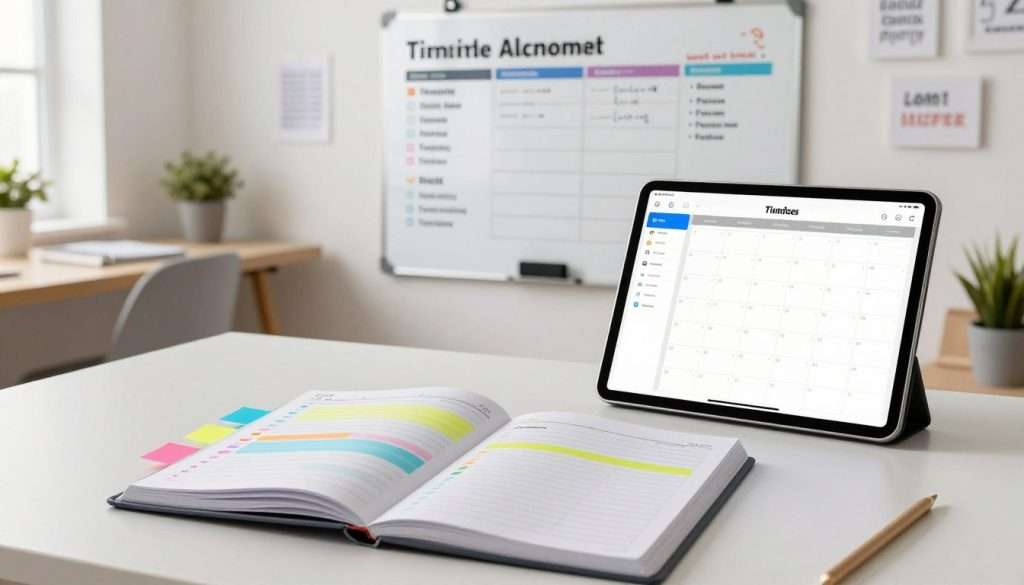
Imagine controlling every hour of your busy school week. Time blocking turns your calendar into a roadmap for success. It changes “study chemistry” into a task with a clear start and finish.
How to Build a Student Time-Blocking Schedule
Assigning specific calendar blocks to classes, studying, meals, exercise, and sleep
Start by mapping out your non-negotiable activities. Block off class times, sleep, and meal breaks first. Then fill the remaining gaps with study sessions and dedicated recovery time.
Planning around fixed commitments and realistic travel time
Always include the time needed to travel between places. If a class is across campus, add a fifteen-minute buffer. Assignments rarely behave like tidy little robots, so extra room keeps delays from ruining your day.
“Time is the most valuable thing a man can spend.”
Strengths and Limitations of Time Blocking
Pros: clear structure, fewer scheduling conflicts, and better use of open time
The biggest advantage is the mental clarity of knowing what to do next. You avoid decision fatigue because your schedule has already made the choice. It also helps you spot conflicts before they become major problems.
Cons: overplanning, inflexibility, and difficulty estimating task length
Do not pack your day so tightly that you have no room to breathe. If you misjudge a project’s length, frustration may grow when your block ends early. Flexibility is key, so treat your blocks as guides, not strict laws.
Best Scheduling Tools for Students
Using Google Calendar for recurring classes and deadlines
When choosing the best scheduling tools for students, Google Calendar handles recurring events well. It tracks weekly classes and major exam dates. You can color-code blocks to view your week quickly.
Using a paper planner or digital task list for daily adjustments
Digital tools help with the big picture, but paper planners and task lists support daily changes. Consistency matters more than using the fanciest app. Choose a natural method and keep using it.
| Tool Type | Best For | Key Benefit |
|---|---|---|
| Google Calendar | Recurring events | Syncs across devices |
| Paper Planner | Daily adjustments | No digital distractions |
| Task List Apps | Quick reminders | Easy to update on the go |
Ultimately, the best scheduling tools for students are the ones you use every day. Keep your system simple, stay consistent, and watch your productivity grow.
Prioritizing Tasks with the Eisenhower Matrix: Best for Deciding What Matters
Does your to-do list feel like a runaway train heading toward a cliff? With a dozen assignments piling up, prioritizing tasks protects your time and peace of mind. The Eisenhower Matrix helps you stop reacting to notifications and focus on meaningful work.
How to Sort Assignments by Urgency and Importance
Separating urgent deadlines from important long-term academic goals
First, separate fires needing immediate action from projects that build your future. Urgent tasks include a quiz due tomorrow or an email from a professor needing a quick reply. Important tasks support long-term goals, such as studying for a final exam or writing a research paper.
Identifying tasks to do, schedule, delegate, or eliminate
After listing tasks, place them into four quadrants. You should do urgent and important items immediately. Schedule important, non-urgent work, such as weekly readings. Delegate minor administrative tasks when possible, and eliminate busywork that adds no learning value.
Strengths and Limitations of the Eisenhower Matrix
Pros: clearer decisions, less overwhelm, and better deadline awareness
This method gives you a clear view of your week and reduces the feeling of drowning. By prioritizing tasks effectively, you feel calmer and know what needs attention today. You also know what can wait until tomorrow.
Cons: subjective categories and the risk of labeling everything urgent
Be careful, though. It is easy to mark every assignment as “urgent.” If everything is a priority, then nothing is.
“The key is not to prioritize what’s on your schedule, but to schedule your priorities.” — Stephen Covey
Applying the Matrix to a Typical School Week
Managing exams, quizzes, projects, readings, and administrative tasks
On Sunday night, map out your week. Put upcoming exams and major projects in the “Do” quadrant. Move daily readings and lecture reviews into the “Schedule” quadrant. Then they will not become last-minute emergencies.
Turning the highest-priority items into scheduled study sessions
After making your “Do” and “Schedule” lists, add them directly to your calendar. Treat these blocks like appointments you cannot miss. By prioritizing tasks this way, you give important academic goals time before the week becomes chaotic.
Weekly Planning and Backward Scheduling: Best for Preventing Deadline Cramming
To stop last-minute cramming, use backward scheduling as a reliable tool. Start with the finish line, then map a calm path toward it. These time management strategies for school turn an intimidating due date into small, easy wins.

How to Plan Backward from a Due Date
Breaking large assignments into research, drafting, revision, and submission stages
Instead of staring at the final deadline, divide your project into clear phases. Mark the due date, then work backward to schedule research, drafting, revision, and final polishing. This simple shift keeps you from writing a ten-page paper in one night.
Adding earlier personal deadlines for unexpected problems
Life happens: your internet may cut out, or a paragraph may stop making sense. Set your personal deadline at least two days before the actual due date. This buffer time lets you handle technical glitches or confusing instructions without clock-driven stress.
Strengths and Limitations of Weekly Planning
Pros: steady progress, fewer surprises, and better workload balance
This plan gives you more control over your academic life. You gain steady progress, fewer late-night panic sessions, and better balance across your subjects. It can lower stress while helping you maintain high-quality work.
Cons: requires regular review and can fail when estimates are unrealistic
This system is not magic. You must estimate how long tasks actually take. If you consistently underestimate your workload, your schedule can fall apart; adjust your estimates as you learn your pace.
A Practical Weekly Review for Students
Checking syllabi, learning platforms, calendars, and unfinished tasks
Set aside fifteen minutes every Sunday for a quick review. Check your syllabi and learning platforms for what is coming up next week. Review your calendar and unfinished tasks to prepare for the days ahead with confidence.
Choosing the week’s most important academic outcomes
Pick the three most important goals you want to achieve by Friday. This helps you use your time management strategies for school to prioritize what truly matters. Knowing exactly what to finish lets you study with purpose and enjoy guilt-free free time.
Task Batching and Themed Study Sessions: Best for Reducing Context Switching
Does your brain ever feel like a browser with fifty tabs open at once? Jumping from an essay to emails and then math problems can sharply weaken your focus. This constant shifting harms your effective study habits.
How to Group Similar Student Tasks
Batching email, online submissions, errands, and administrative work
Set aside one specific hour for all your “admin” tasks. Handle emails, online portal submissions, and campus errands in one block instead of checking your inbox every ten minutes. This keeps your main study time free from distracting interruptions.
Grouping similar subjects without sacrificing learning quality
Group subjects that use similar mental skills. For example, study history reading and sociology notes back-to-back because both require heavy reading and synthesis. Avoid grouping subjects that are too similar, which can cause mental fatigue and confusion.
Strengths and Limitations of Task Batching
Pros: fewer distractions, faster setup, and less mental switching
The biggest benefit is less “setup time.” Staying in one mental zone saves energy because you do not need to relearn where you stopped. These student productivity hacks help you stay in a flow state longer.
Cons: repetitive work, delayed urgent tasks, and unsuitable subject combinations
Batching does not work for every situation. Three hours of chemistry might exhaust you before you finish. Do not use batching to ignore an urgent deadline because it does not fit your current “theme.”
| Task Category | Batching Suitability | Primary Benefit |
|---|---|---|
| Administrative | High | Clears mental clutter |
| Creative Writing | Medium | Maintains flow |
| Complex Problem Solving | Low | Prevents burnout |
| Errands/Logistics | High | Saves travel time |
When Batching Beats a Strict Daily Schedule
Using themed sessions during fragmented school days
If classes and meetings break up your day, themed sessions can help. Use morning gaps for light review and longer afternoon blocks for deep work. This structure turns a fragmented day into purposeful sessions.
Combining batching with active recall and focused work intervals
Pair each batch with active recall techniques. During each focused interval, test yourself on the material you grouped together. This combination supports retaining information effectively, not just staying busy.
How to Choose the Right Time Management System for Your School Life
Choose a system that solves the study problems slowing you down. You do not need every method; use student time management techniques that fit your needs.
Match the Technique to Your Main Time Management Problem
Choose methods based on your biggest time problem. Naming that struggle can make your semester less stressful.
Choose Pomodoro when starting and focusing are the biggest challenges
If you stare at a blank page for hours, starting feels hard. Pomodoro breaks work into small chunks, making focus effortless.
Choose time blocking when your schedule feels crowded or unpredictable
When classes, clubs, and social events crowd your day, you need structure. Time blocking gives each task a place on your calendar, helping you reclaim the day.
Choose prioritization and backward scheduling when deadlines keep piling up
If you often feel surprised by upcoming exams, these methods help. They make you look ahead and work backward from due dates, so you avoid cramming.
Build a Simple System Instead of Using Every Technique
The best time management strategies for school are simple enough to use regularly. Trying every tool at once can make life harder.
Pair one planning method with one focus method
Choose one method to plan your week and one method to stay focused. For example, use backward scheduling for your month and Pomodoro for daily reading.
Keep a single trusted calendar and task list
Keep tasks in one trusted calendar and list, not across five apps or notebooks. Choose one source of truth and check it often, so you know what needs to be done.
| Method Type | Best For | Key Benefit |
|---|---|---|
| Planning | Weekly Review | Prevents Deadline Stress |
| Focus | Pomodoro | Beats Procrastination |
| Organization | Time Blocking | Controls Busy Schedules |
Free Tools and Resources That Support Better Study Routines
Many scheduling tools for students exist, but your habits matter more than the tool. Whether digital or paper, use your system consistently.
Using Google Calendar, Todoist, Notion, or a paper planner responsibly
Choose one tool that feels natural to you. Notion or Todoist suit technology fans, while a paper planner works if checked daily.
Getting the free book How to Become the Smartest Student in the Classroom
If this article resonated with you, our free book offers a complete system for managing your workload. It covers what you need to succeed without typical academic burnout.
Finding memory techniques, study routines, and strategies that actually stick
Learning should be enjoyable. Our guide gives you practical steps to retain information and study more efficiently.
Call to action: Grab your free copy at https://www.studyingmachine.com/free-books/
Ready to change your study habits? Grab your free copy here and build a system that works for you: https://www.studyingmachine.com/free-books/
Common Mistakes That Undermine Student Time Management
Have you noticed your carefully made study plan falling apart by Wednesday afternoon? This frustration often appears when you use time management tips for students without considering daily life. Schedules may look great on paper while ignoring the human needs that keep us going.
Creating Schedules That Leave No Room for Reality
Accounting for sleep, meals, commuting, work, and recovery
Your brain cannot work at full speed for sixteen hours straight. If you skip sleep, healthy meals, and commuting, your plan will eventually collapse. Treat these needs as required appointments, not optional extras.
Leaving buffer time for difficult assignments and unexpected changes
Life is unpredictable, and schoolwork often takes longer than expected. Leave buffer time in your calendar for surprise group projects or extra-tough reading assignments. This cushion keeps one delay from ruining your entire week.
Confusing Busyness with Effective Study
Measuring progress by practice, recall, and completed outcomes
Many students mistake three hours with a textbook for real learning. True progress depends on what you can actually recall and the specific tasks you finish. Focus on useful results, not the hours spent at your desk.
Replacing passive rereading with active recall and deliberate practice
Rereading notes can feel productive, but it may keep you busy without teaching you much. Try active recall by testing yourself on the material. This deliberate practice makes your brain work harder and improves retention.
Failing to Review and Adjust the System
Checking what worked at the end of each week
The key to improving time management skills is a weekly review. Each Sunday, review your calendar and compare it with what actually happened. Be honest about where you spent time and where you got stuck.
Changing workload estimates and study blocks based on evidence
Do not rely on wishful thinking when planning next week. If an assignment took two hours instead of one, adjust future study blocks. Using evidence from your own performance makes your schedule a stronger tool for success.
| Mistake | The “Idealized” View | The Realistic Approach |
|---|---|---|
| Scheduling | Back-to-back study blocks | Includes breaks and buffers |
| Study Method | Passive rereading for hours | Active recall and testing |
| Review Process | Ignoring past failures | Evidence-based adjustments |
Conclusion
You now have tools to improve your academic life: Pomodoro helps you start, while time blocking organizes busy days. The Eisenhower Matrix shows what matters, and backward scheduling prevents cramming. Task batching keeps your brain sharp by reducing mental switching.
Building effective study habits takes time, not a single sprint. Choose one method, test it for a week, and adjust it to your energy and workload. Improving time management skills can reduce stress, create free time, and improve your school experience.
My free book How to Become the Smartest Student in the Classroom gives you a full system. It includes memory techniques, study routines, and strategies that actually stick. The book costs nothing, has no catch, and you can get your free copy here → https://www.studyingmachine.com/free-books/