
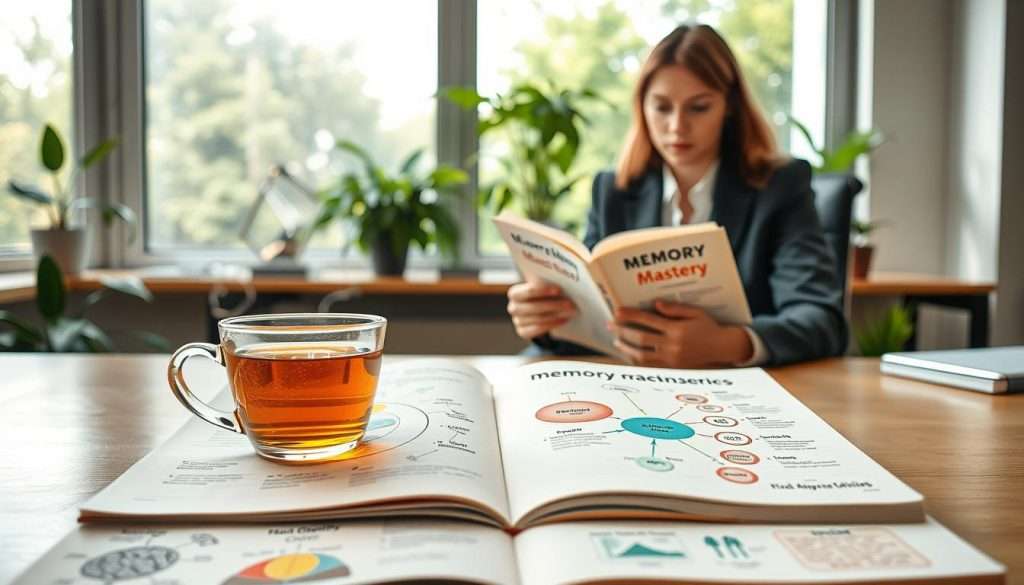
Can you really train your brain to remember anything effortlessly? For many of us, memorizing lots of information seems hard. This is true, even with the busy lives we lead today, like in college where we have to study a lot.
Memory is key in our daily lives, more so for students who have to learn and remember a lot. Luckily, anyone can improve their memory with the right methods and practice.
We will look at memory improvement techniques that make remembering easy. By using these methods, you can make your study time better and remember things more easily.
Key Takeaways
- Understand the importance of memory in everyday life.
- Discover techniques to improve your memory.
- Learn how to apply these techniques for effortless memorization.
- Enhance your study sessions with effective memory strategies.
- Develop a personalized approach to memory improvement.
The Science Behind Memory Formation
Memory isn’t something you can hold in your hand; it’s a skill we can improve. To boost memory power, we must learn how our brain handles information.
How Your Brain Creates Memories
Our brain makes memories through a complex process. This process is key for learning and remembering new things.
The Three Stages of Memory Processing
Memory processing has three main stages: encoding, storage, and retrieval. Each stage is crucial for remembering information.
Encoding: Getting Information In
Encoding is the first step where we process and understand information. It’s like snapping a photo of the info to save it in our memory.
Storage: Keeping Information Available
Storage is about keeping the information we’ve encoded for a long time. Good storage means we can easily find the info later.
Retrieval: Accessing Stored Information
Retrieval is the last step, where we bring back the stored info. It’s like searching for a file in our mental cabinet.
Knowing these stages helps us use memory improvement techniques. This way, we can remember and recall information better.
Why We Forget and How to Prevent It
Forgetting is a natural part of life. Knowing why it happens can help us remember better. Forgetfulness can be caused by many factors. Addressing these can greatly enhance memory retention.
Common Causes of Forgetfulness
Forgetfulness comes from many sources, like not paying attention, stress, and some health issues. Knowing these causes is the first step to fight them.
- Distractions and lack of focus
- Stress and anxiety
- Medical conditions like Alzheimer’s or dementia
Lifestyle Factors That Affect Memory
Lifestyle greatly affects memory. Things like sleep, stress, and health play big roles in remembering.
Sleep Quality and Memory Consolidation
Sleep is key for memory. It helps our brain process and strengthen memories. This moves information from the hippocampus to the neocortex for long-term storage.
Stress Management for Better Recall
Too much stress hurts memory. Doing stress-reducing activities like meditation or yoga helps. It makes a better environment for memory.
Understanding forgetfulness and changing our lifestyle can boost mental recall strategies. Simple steps like better sleep and stress control can help a lot.
How to Remember Anything Without Stress
Traditional ways of memorizing can be stressful and not very effective. But, there’s a simpler way. We can boost our memory by using easy techniques that make learning fun and effective.
The Problem With Traditional Memorization
Old methods of memorizing often involve just repeating what you’ve learned. This can be dull and stressful. It’s time to rethink how we learn and remember information.
Principles of Effortless Memory Techniques
Effortless memory techniques make learning fun and engaging. They work with our brains, not against them.
Working With Your Brain, Not Against It
Our brains respond well to emotions and associations. By using these natural processes, we can create memorable mental images that stick. Here are some key principles:
- Use visualization to create vivid mental pictures.
- Make associations between new information and existing knowledge.
- Use emotions to enhance memory retention.
Making Learning Enjoyable and Effective
When learning is fun, we stay motivated and engaged. Memory enhancement methods like gamification and interactive learning can make a big difference.
By using these effortless memory techniques in our daily lives, we can improve our memory skills and reach our goals without feeling overwhelmed.
The Memory Palace Technique
Imagine having a mental filing cabinet where you can store and retrieve information with ease. That’s what the Memory Palace technique offers. It uses a familiar place to store information, helping you remember lists and facts.
Creating Your First Memory Palace
To begin, pick a place you know well. It could be your childhood home, current apartment, or school. The goal is to choose a place you can easily navigate in your mind.
Choosing Familiar Locations
Choose a location you know well, like your home. Imagine walking through it and see each room clearly. The more familiar the place, the better it works as a Memory Palace.
Mapping Your Route
After picking your location, map out a route through it. This could be from the front door to your bedroom. A consistent route helps organize and retrieve memories well.
Practical Applications for Daily Life
The Memory Palace technique is useful for everyday life, not just for memory champions. It helps remember shopping lists, important facts, or study for exams.
Remembering Shopping Lists
Imagine placing items you need to buy along your Memory Palace route. As you walk through your home in your mind, you’ll remember the items on your list.
Memorizing Important Facts
For complex information, like historical dates or formulas, link them to specific places in your Memory Palace. The more vivid the association, the better you’ll remember.
“The Memory Palace technique is a powerful tool for improving memory.”
By creating your Memory Palace and practicing regularly, you’ll be amazed at how much you can remember.
Spaced Repetition: Remember More by Studying Less
The secret to boosting your memory power is not in how much you study. It’s in how you review what you’ve learned. Spaced repetition is a technique that involves reviewing information at increasingly longer intervals. This helps solidify it in your long-term memory.
By using spaced repetition, you can significantly improve your ability to retain information. This method fights the forgetting curve. It’s a psychological concept that shows how our memory of new information fades over time if not reinforced.
Optimizing Review Sessions
Digital tools like Anki make it easier to implement spaced repetition in your study routine. These tools allow you to record information you want to remember and retrieve it at optimal intervals. This reinforces your memory and helps you recall it when needed.
By incorporating spaced repetition into your learning strategy, you can enhance your memory retention. You’ll also reduce the time spent studying. This means you’re not just studying less, but also remembering more!
Chunking: Breaking Information Into Manageable Pieces
Chunking is a great way to make complex information easier to handle. It helps you organize information into smaller groups. This way, you can improve your memory skills and keep more information in mind.
How to Chunk Different Types of Information
Chunking works for many kinds of information, like numbers, dates, and complex ideas. For example, remembering a phone number is easier when you break it into smaller parts. This way, you don’t have to try to recall the whole number at once.
Examples of Chunking in Action
Let’s look at some real-life examples of chunking. When you’re trying to remember numbers and dates, group them into meaningful categories. Historical dates can be broken down by century or by major events.
Memorizing Numbers and Dates
To remember a long number, divide it into smaller parts. For example, the number 123456789 can be broken down into 123-456-789. Dates can also be easier to remember if you link them to events or other memorable things.
Organizing Complex Concepts
Chunking complex ideas means breaking them down into smaller, related groups. This makes it easier to understand and remember. For example, when studying a tough topic, making an outline or a mind map can help organize the information into smaller, more manageable chunks.
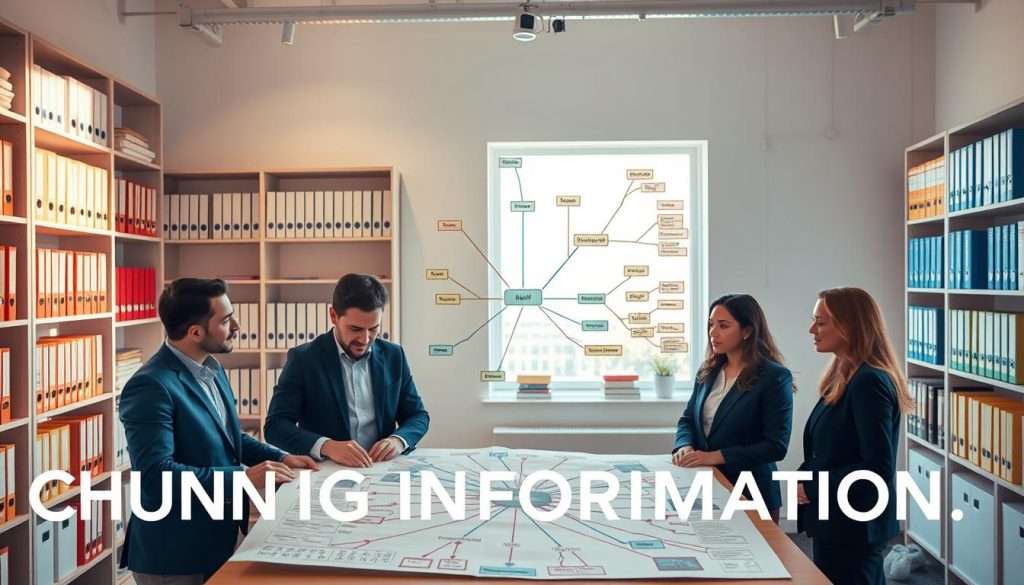
Using chunking as a memory enhancement method makes learning and remembering easier. So, when you have a lot of information to remember, try breaking it down into smaller parts!
Association Techniques for Instant Recall
Linking new info to what you already know helps you remember it fast. Association techniques use mental images to connect new data to meaningful things you already know.
Creating Memorable Mental Images
To make mental images stick, they need to be vivid and fun. Using exaggeration and absurdity can really help.
Using Exaggeration and Absurdity
Exaggeration and absurdity make images stick in your mind. For example, to remember a list, create a silly story that links each item.
Engaging Multiple Senses
Using more senses (sight, sound, touch, taste, smell) makes images more real and easy to remember. Try to use as many senses as you can when making your mental images.
Linking New Information to Existing Knowledge
One great way to remember new stuff is to connect it to something you already know. Here are some tips:
- Connect new data to a familiar concept or memory.
- Use metaphors or analogies to link new information to existing knowledge.
- Create a story that incorporates both the new and existing information.
By using these association techniques, you can greatly improve your memory.
Mnemonic Devices That Actually Work
Mnemonic devices are more than tricks; they’re tools to boost your brainpower. They help you remember complex information better.
Acronyms and Acrostics for Quick Memorization
Acronyms and acrostics are easy yet effective for remembering lists or sequences. For example, “ROY G BIV” helps you recall the rainbow colors: Red, Orange, Yellow, Green, Blue, Indigo, Violet. An acrostic like “Every Good Boy Does Fine” can help remember musical notes on the treble clef staff.
Creating Stories to Remember Sequences
Creating a story with the items you want to remember is a great technique. It makes the information stick better. For instance, making a story to remember a shopping list can be fun and helpful.
The Method of Loci for Ordered Information
The method of loci, or “memory palace,” uses a familiar place to remember items. You associate each item with a location. Walking through the space in your mind helps you recall the items in order.
Using these memory enhancement methods daily can boost memory power. It helps you remember important information better.
Overcoming Common Memory Challenges
Many of us face memory challenges, but there are ways to beat them. Whether it’s too much information or trouble remembering new stuff, knowing how you learn can help a lot. It’s key to improving your memory skills.
Dealing With Information Overload
In today’s world, we get hit with tons of data. To keep our memories sharp, we need to sort out what’s important. Using the Eisenhower Matrix is a smart way to do this. It helps you decide what tasks are urgent and important, so you can focus on the most critical ones first.
Strategies for Different Learning Styles
Everyone learns differently, and finding your style can boost your memory. Here are tips for visual, auditory, and kinesthetic learners:
Visual Learners: Seeing to Remember
- Use diagrams and mind maps to organize information.
- Watch videos and animations to understand complex concepts.
Auditory Learners: Hearing to Remember
- Listen to podcasts and audiobooks to absorb information.
- Use rhymes and jingles to remember key details.
Kinesthetic Learners: Doing to Remember
- Engage in hands-on activities and experiments.
- Take notes by hand to reinforce learning.

By figuring out your learning style and using these tips, you can improve your memory skills and enhance memory retention. Try out different methods to see what works best for you!
Physical Exercise and Nutrition for Better Memory
A healthy body and mind are connected. Studies show that exercise and good nutrition can boost memory power. While mental exercises are key, our lifestyle choices also matter a lot.
Brain-Boosting Foods and Supplements
Eating the right foods can help your brain. Foods high in antioxidants, omega-3s, and vitamins are great. Here are some examples:
- Blueberries, which are packed with antioxidants
- Fatty fish like salmon, rich in omega-3s
- Nuts and seeds, which provide healthy fats and vitamins
Supplements like Ginkgo biloba and omega-3 capsules can also help. But, always talk to a doctor before taking any supplements.
How Movement Enhances Memory Formation
Exercise is good for both body and mind. It boosts blood flow to the brain, improving memory and thinking.
Aerobic Exercise and Hippocampal Growth
Aerobic exercises like running or cycling help the hippocampus grow. This area of the brain is key for memory. Regular exercise can even make the hippocampus bigger, helping to fight memory loss as we age.
Simple Movement Breaks for Study Sessions
Short breaks for movement can make studying better. Try taking short walks or stretching during study time. It helps with memory and prevents burnout.
| Exercise Type | Memory Benefit |
|---|---|
| Aerobic Exercise | Promotes hippocampal growth, enhancing memory formation |
| Short Movement Breaks | Improves focus and retention during study sessions |
Practical Memory Applications for Daily Life
Using memory techniques can make everyday tasks easier and more confident. These methods are not just ideas; they work in real life to improve your daily activities.
Remembering Names and Faces
Many struggle to remember names and faces. Association techniques can help a lot. For example, link someone’s name to a unique feature or a word that sounds similar.
Let’s say you meet someone named “Rose.” Picture a rose flower on their shoulder. This makes it easier to remember them later.
Memorizing Speeches and Presentations
Memorizing speeches can be tough, but the Memory Palace technique works well. Imagine a place you know well and link parts of your speech to it.
Picture your living room. Link the start of your speech to the front door, the main part to the sofa, and the end to the fireplace.
Learning New Languages Effortlessly
Learning a new language is rewarding, and memory techniques can help. Focus on Vocabulary Acquisition and Grammar Pattern Recognition.
Vocabulary Acquisition Techniques
Mnemonics are great for remembering new words. For example, to remember “gato” (cat) in Spanish, think of a cat wearing a gate.
Grammar Pattern Recognition
Understanding grammar rules is key. Create mental images or stories to help remember these rules.
| Memory Technique | Application | Benefit |
|---|---|---|
| Association | Remembering names and faces | Improved social interactions |
| Memory Palace | Memorizing speeches and presentations | Enhanced confidence in public speaking |
| Mnemonics | Vocabulary acquisition in new languages | Easier language learning |
By using these memory techniques, you can improve your memory skills and make your daily life better. Whether it’s remembering names, speeches, or learning languages, these strategies make it easier to reach your goals.
Conclusion: Building a Lifetime of Memory Mastery
We’ve looked at many ways to boost your memory. These methods can help you remember better and reach your goals. By using these techniques, you’re starting on the path to easy memory.
Practicing regularly is crucial for mastering memory. We urge you to keep using the strategies from this article. With effort and time, you’ll get good at remembering anything.
Remember, memory is like a muscle that grows stronger with use. The more you practice, the better it gets. Adding memory tricks to your daily life will make remembering easy and confident.
Begin your journey to better memory today. Discover how a sharp memory can change your life. You have the power to improve your memory and achieve your dreams. It’s time to start and make it happen.