

Learning at home can feel like trying to keep a balloon underwater. Your phone rings, chores need doing, or random thoughts distract you. It’s a common problem for those learning from home, who now have more freedom than in school.
Creating a solid routine is key to success. In this guide, we’ll share proven home study tips to help you manage your time better. You’ll learn how to plan, create a better study environment, and use concentration strategies that really work.
If you want to sharpen your focus at home, our free book, How to Become the Smartest Student in the Classroom, has everything you need. It teaches memory techniques and routines that stick. Get your free copy here → https://www.studyingmachine.com/free-books/.
Key Takeaways
- Remote learning requires more personal planning than traditional schooling.
- Creating a dedicated space helps signal your brain that it is time to work.
- Digital temptations are the biggest enemy of deep learning.
- Active techniques keep your mind engaged and prevent boredom.
- Recovering calmly after a lapse in focus is better than giving up entirely.
How to Study at Home Without Getting Distracted: Build a Focus-Friendly Plan
Ever sat down to study and ended up cleaning your room an hour later? You’re not alone. Many students think willpower alone can keep them on track. But desire alone rarely keeps a session moving forward. To master how to study at home without getting distracted, you need a clear plan.
“By failing to prepare, you are preparing to fail.”
Step 1: Choose One Clear Study Outcome
Turn a broad subject into a specific task
Goals like “study biology” are too broad. Break your work into small, clear steps. For example, aim to “answer ten questions about cell transport and correct my mistakes.”
Define what “finished” means before you begin
Having a clear goal keeps you focused. Knowing what success looks like helps you stay on track. These study techniques boost your momentum by showing your progress.
Vague Goal Specific Outcome Status Study History Outline Chapter 4 notes Actionable Do Math Solve 5 quadratic equations Actionable Read English Summarize 3 pages of text Actionable Step 2: Schedule a Realistic Study Block
Match difficult work to your strongest focus hours
Your energy levels change during remote learning. Focus on hard subjects when you’re most alert. Save easy tasks for when you’re a bit tired.
Plan breaks, meals, and competing responsibilities
A strict schedule that ignores your needs will fail. Include time for lunch, walks, and chores. This keeps stress low and helps you stay focused.
Step 3: Use a Short Start-Up Routine
Gather materials before the session begins
Friction kills productivity tips. If you need to search for pens or books, you’ll lose focus. Keep your desk tidy and tools ready for a smooth start.
Start with a two-minute action to overcome resistance
Starting is the hardest part. Commit to just two minutes to overcome procrastination. Once you start, it’s easier to keep going.
If this article speaks to you, check out my free book How to Become the Smartest Student in the Classroom. It offers memory techniques, study routines, and strategies that work. No cost, no catch. Get your free copy here.
Create a Study Environment That Prevents Distractions
Turning your home into a learning hub starts with your study spot. By setting up your space, you work with your brain, not against it. These home study tips will make any part of your home a focus zone.
Choose a Consistent Place to Study
Separate study space from sleep and entertainment areas
Your brain likes routine. Studying in bed mixes up your brain’s signals. Keep your study area separate from where you sleep and relax to stay focused.
Make a small workspace effective when a separate office is unavailable
You don’t need a big office to study well. A small desk or a specific chair can be great if used only for studying. When you sit there, your brain gets ready to work.
Remove Visual and Physical Distractions
Clear unnecessary items from the desk
A messy desk messes with your mind. Clear your desk before studying to avoid distractions. This simple step helps keep your focus sharp.
Keep only the books, tools, and notes needed for the current task
Only use what you need for the task at hand. Too many books can confuse your mind. Keeping things simple helps you stay focused.
Prepare Your Environment for Comfort
Adjust lighting, temperature, seating, and screen height
Being uncomfortable can stop your study flow. Make sure your chair supports you, your screen is right, and your room is bright. Comfort helps your mind stay sharp.
Keep water and healthy snacks within reach
Stay hydrated and energized without leaving your study spot. Having water and snacks nearby keeps you focused. A well-rested brain is less easily distracted.
| Feature | Distraction-Free Zone | Cluttered Zone |
|---|---|---|
| Lighting | Bright and focused | Dim or flickering |
| Desk Surface | Clear and organized | Full of random items |
| Primary Use | Study only | Mixed with gaming/eating |
| Accessibility | Water and tools ready | Constant searching |
If you found this helpful, check out my free book How to Become the Smartest Student in the Classroom. It offers memory tips, study routines, and strategies that work. No cost, no catch. Get your free copy here.
Control Your Phone, Notifications, and Digital Temptations
Digital distractions are sneaky, but you can outsmart them with a few simple habits. Many people think a quick three-second glance at a buzzing phone is harmless. But it actually derails your entire train of thought. To build a truly effective study environment, you must treat your digital space with the same care as your physical desk.
Put Your Phone Out of Immediate Reach
Use another room, a drawer, or airplane mode during focused work
The best way to stop the urge to check your phone is to remove it from your sight entirely. Try leaving it in another room or tucking it away in a desk drawer. If you must keep it nearby, switch it to airplane mode to silence the temptation of incoming pings.
Set emergency contact exceptions when necessary
We know you might worry about missing something urgent. Most modern phones allow you to set “Do Not Disturb” exceptions for specific family members. This way, you stay reachable for emergencies without letting social media notifications break your flow.
Block Online Distractions
Disable nonessential notifications on computers and tablets
Your computer is often the biggest source of interruptions during remote learning. Turn off desktop notifications for email, chat apps, and news sites before you start. You will be surprised at how much quieter your brain feels when the screen stops flashing at you.
Use website blockers during scheduled study sessions
If you find yourself mindlessly opening social media, use a website blocker. These tools act as a digital guardrail, keeping you on track until your session is finished. It is a simple way to enforce discipline when your willpower feels a bit low.
Separate School Tools from Entertainment
Close unrelated browser tabs and applications
A cluttered browser is a recipe for a scattered mind. Before you begin, close every tab that does not directly relate to your current task. Keeping your digital workspace clean helps you stay focused on the material at hand.
Create a dedicated browser profile for remote learning
Consider setting up a separate browser profile just for your studies. This keeps your bookmarks, extensions, and history free from personal distractions. It creates a clear mental boundary between “work mode” and “fun mode.”
Handle Necessary Digital Research
Write down distracting links or questions for later
It is easy to fall down a rabbit hole when you encounter an interesting question. Instead of clicking, write the topic down on a piece of paper. You can satisfy your curiosity once your study block is officially over.
Use a defined research window instead of open-ended browsing
If your task requires heavy research, do not browse aimlessly. Set a timer for a specific research window to gather what you need. This keeps your momentum high and prevents you from getting lost in irrelevant content.
| Distraction Type | Quick Fix | Long-term Benefit |
|---|---|---|
| Phone Pings | Airplane Mode | Deep Focus |
| Browser Tabs | Close Unused Tabs | Mental Clarity |
| Social Media | Website Blockers | Better Grades |
If this article resonates with you, my free book How to Become the Smartest Student in the Classroom gives you a full system — memory techniques, study routines, and strategies that actually stick. No cost, no catch. Grab your free copy here.
Use Active Study Techniques to Maintain Concentration
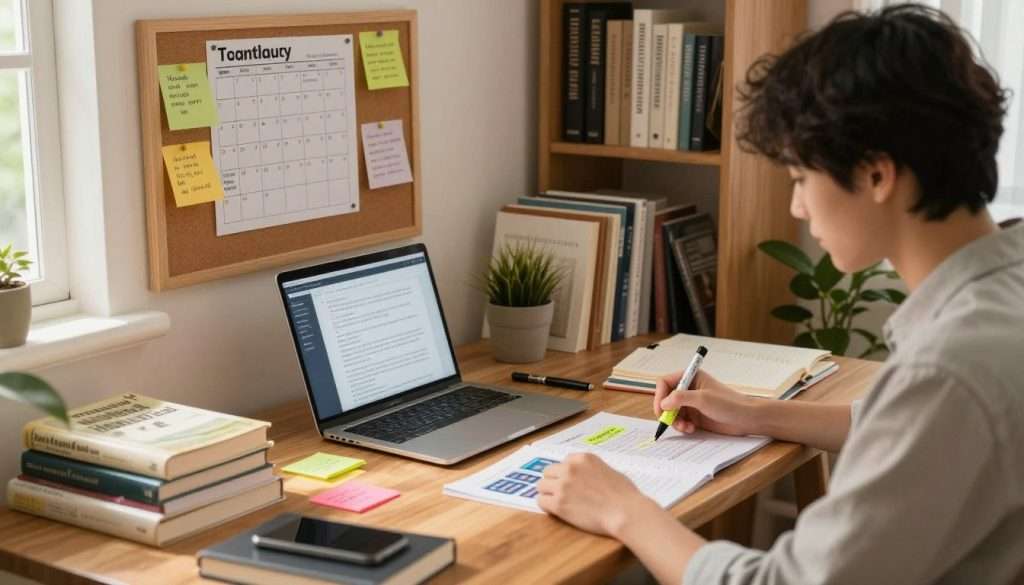
We’ve all been there: reading the same paragraph over and over without getting anything from it. It’s easy to get caught up in passive reading, where your eyes move over the text but your mind drifts off. To improve your concentration strategies, you need to engage your brain more.
Replace Passive Reading with Retrieval Practice
Close the book and recall the main ideas from memory
Instead of re-reading, try closing your book after a few pages. Make yourself explain what you just read out loud or write it down. This active recall is much more effective than just highlighting.
Create practice questions before reviewing the answers
Turn your study material into a quiz. Make questions based on the content to train your brain. This is a powerful study technique for keeping information long-term.
Break Lessons into Manageable Focus Targets
Study one concept, chapter section, or problem type at a time
Trying to learn everything at once can lead to burnout. Focus on one small piece at a time. This keeps your energy up and prevents feeling overwhelmed.
Use checklists to make progress visible
Break your study into a simple checklist. Checking off tasks gives you a satisfying dopamine hit that keeps you going. It makes a big task feel like a series of small wins.
Combine Several Effective Study Techniques
Use spaced repetition for facts, vocabulary, and formulas
Don’t cram everything into one night. Review your material at increasing intervals. This helps move information from short-term to long-term memory.
Use the Feynman technique to identify gaps in understanding
Try explaining a complex topic as if teaching a child. If you struggle or use jargon, you’ve found a knowledge gap. Go back to the source, fill the gap, and try again.
Make Notes That Require Thinking
Summarize ideas in your own words
Never copy text word-for-word. Paraphrasing forces you to process and understand the information. This active engagement makes the material stick better than just memorizing.
Connect new material to examples, diagrams, and prior knowledge
Your brain loves patterns. Try drawing diagrams or linking new concepts to what you already know. These mental hooks help you remember information later.
| Method | Effort Level | Retention Rate |
|---|---|---|
| Passive Reading | Low | Poor |
| Highlighting | Low | Low |
| Retrieval Practice | High | Excellent |
| Feynman Technique | High | Superior |
If this article resonates with you, my free book How to Become the Smartest Student in the Classroom offers a full system. It includes memory techniques, study routines, and strategies that really work. No cost, no catch. Get your free copy here.
Follow a Focus-and-Break Rhythm That Works at Home
Think of your study time like a series of gears that you can shift to match your energy. You don’t need a strict timer to master your home study tips. Instead, see your schedule as a flexible tool that fits your mood.
Choose a Session Length Based on the Task
Try focused intervals of 25, 45, or 60 minutes
Try different time blocks to see what works for you. Some tasks need a quick burst, while others require a deeper focus. You might find forty-five minutes perfect for complex reading, and twenty-five minutes great for quick tasks.
Use shorter sessions when beginning or rebuilding concentration
Don’t start with long hours if you’re getting back into studying. Short sessions help build your focus without burnout. These study techniques are designed to help you succeed, not overwhelm you.
Take Breaks That Restore Attention
Stand up, stretch, walk, or look away from screens
True rest means moving your body and giving your eyes a break. Stand up, stretch, or walk around to get your blood flowing. These simple productivity tips help you come back to your desk refreshed and ready.
Avoid social media and videos that make breaks difficult to end
It’s easy to get lost in social media, but it can turn a short break into a long one. Avoid endless scrolling, as it drains your energy. Choose activities that help your brain recover, not drain it.
End Every Break with a Specific Restart Cue
Write down the next action before stepping away
Write down what you need to do next before leaving your desk. This simple habit makes it easy to start again. You’ll know exactly where to pick up, keeping your momentum high.
Use a timer and return to the same workspace
Always use a timer for your breaks so you know when to start again. Returning to the same spot helps your brain quickly switch back to “study mode”. Consistency is key when building a reliable routine.
Adjust the Method When Focus Fails
Shorten the next interval instead of abandoning the session
If your mind wanders, don’t give up. Shorten your next interval to ten or fifteen minutes to keep moving forward. It’s better to do a little bit than nothing at all.
Switch between reading, practice problems, and recall activities
Changing your activity can help keep your brain engaged. If reading feels hard, try solving problems or using flashcards. This change can spark the energy you need to finish strong.
| Interval Type | Best For | Recommended Duration |
|---|---|---|
| Short Burst | Quick reviews or warm-ups | 25 Minutes |
| Standard Deep Work | Reading and note-taking | 45 Minutes |
| Extended Focus | Complex projects or writing | 60 Minutes |
If this article resonates with you, my free book How to Become the Smartest Student in the Classroom offers a full system. It includes memory techniques, study routines, and strategies that stick. No cost, no catch. Grab your free copy here → https://www.studyingmachine.com/free-books/.
Manage Family, Roommates, Noise, and Unexpected Interruptions
Your home might have surprise visitors like pets or delivery drivers. Remote learning is flexible but also brings challenges. Learning a few concentration strategies can help you stay focused when it gets noisy.
Communicate Your Study Schedule
Tell family members or roommates when you need uninterrupted time
Talking openly is key. Letting those you live with know when you study can avoid conflicts.
Use a visible sign, closed door, or shared calendar
Visual signs help set boundaries. A closed door or a “Do Not Disturb” sign shows you’re focused.
Control Noise Without Creating New Distractions
Use earplugs, steady background noise, or instrumental music
Tools like earplugs or white noise machines can help. Many find that background music helps them concentrate.
Avoid lyrics and audio that compete with reading or memorization
Choose music wisely. Music with lyrics can distract you from your studies.
Create an Interruption Plan
Decide which interruptions are urgent before studying
Not all knocks need your immediate attention. Agree on what’s urgent and what’s not.
Keep a note for questions and requests that can wait
Have a notepad for non-urgent requests. This way, you can acknowledge them without losing focus.
Recover Quickly After an Interruption
Review the last sentence, problem, or note you completed
Don’t worry if you’re interrupted. Take a moment to review what you were doing.
Restart with a small, clearly defined task
Start again with a small task. This helps you get back into your flow without feeling overwhelmed.
If you found this helpful, check out my free book How to Become the Smartest Student in the Classroom. It has memory techniques, study routines, and strategies that work. No cost, no catch. Get your free copy here → https://www.studyingmachine.com/free-books/.
Stay Motivated and Track Progress During Home Study
Keeping your momentum high is more than just willpower. It needs a solid system. When you learn to focus at home, you turn a chore into a path toward your future. Let’s explore how to keep your eyes on the prize.
Connect Daily Tasks to a Meaningful Goal
Identify the exam, assignment, skill, or future opportunity behind the work
It’s easy to lose interest when staring at a textbook. Try linking every session to a bigger picture. Like passing a tough exam or mastering a skill for your career. Knowing your “why” makes the hard work feel worth it.
Use a visible reason for studying when motivation drops
When you feel like quitting, look at a physical reminder of your goal. This could be a sticky note on your monitor or a photo of your dream school. These simple productivity tips help you push through the slump.
Track Effort Instead of Waiting for Motivation
Record completed focus sessions and practice sets
Don’t wait for inspiration to strike before you start. Instead, keep a simple log of your completed study blocks. Seeing a list of finished tasks provides a huge boost to your confidence.
Measure progress through recall, accuracy, and completed tasks
Use these concentration strategies to see how much you are actually learning. If you can explain a concept from memory or finish a practice set with high accuracy, you are winning. Tracking these small wins proves that you are moving forward.
Use Small Rewards Without Losing Momentum
Reward completed study blocks with movement, food, or social time
You deserve a treat for your hard work! After a long session, step away to grab a snack, stretch your legs, or send a quick text to a friend. These rewards keep your brain fresh and ready for the next round.
Keep rewards time-limited and separate from the study space
The trick is to keep your break short so you don’t lose your flow. Always leave your desk to enjoy your reward. This creates a clear mental boundary between “work mode” and “rest mode.”
Review and Improve Your Routine Weekly
Identify the distractions that appeared most often
At the end of each week, take five minutes to look back. Ask yourself what kept pulling you away from your books. Was it your phone, a noisy roommate, or just a messy desk?
Change one part of the environment or schedule at a time
Pick just one thing to fix for the following week. By making small, steady changes, you build a system that works for you. If this article resonates with you, my free book How to Become the Smartest Student in the Classroom gives you a full system — memory techniques, study routines, and strategies that actually stick. No cost, no catch. Grab your free copy here → https://www.studyingmachine.com/free-books/.
Fix Common Home-Study Problems and Protect Your Energy
Sometimes, your brain just won’t cooperate. But we have clever ways to get you back on track. Remember, hitting a wall doesn’t mean you’re a bad student. It just means you need a better strategy for how to study at home without getting distracted.

When You Keep Checking Your Phone
Increase physical distance and use stricter notification settings
If your phone feels like a magnet, stop fighting it with willpower alone. Move it to another room or put it inside a drawer while you work. Turning on “Do Not Disturb” mode is a game-changer for keeping your focus sharp.
When You Feel Tired While Studying
Check sleep, hydration, food, movement, and study timing
Before you blame your lack of motivation, check your physical needs. Are you drinking enough water? Did you get enough sleep last night? Sometimes a quick walk or a healthy snack is all you need to recharge your energy levels.
“The secret of getting ahead is getting started.”
When You Keep Procrastinating
Reduce the first task to five minutes or one practice question
Procrastination often happens because a task feels too big or scary. Shrink your goal down to just five minutes of work. Once you start, the momentum usually carries you forward.
Remove ambiguity by writing the exact next action
Vague goals like “study math” lead to confusion and delay. Instead, write down the exact next action, such as “solve three algebra problems on page 42.” This simple trick makes your home study tips much more effective.
When Your Home Is Too Distracting
Consider a library, quiet campus space, or structured study location
If your environment is simply too loud, don’t force it. Sometimes a change of scenery like a local library or a quiet coffee shop is exactly what you need to reset your focus.
Use remote learning tools without allowing unnecessary multitasking
When engaging in remote learning, keep your browser tabs limited to only what you need. Close social media and entertainment sites before you begin your session to avoid the temptation of wandering off-task.
| Problem | Quick Fix | Result |
|---|---|---|
| Phone addiction | Move to another room | Deep focus |
| Low energy | Hydrate and move | Mental clarity |
| Procrastination | Five-minute rule | Task completion |
| Noisy home | Change location | Better output |
If this article resonates with you, my free book How to Become the Smartest Student in the Classroom gives you a full system — memory techniques, study routines, and strategies that actually stick. No cost, no catch. Grab your free copy here → https://www.studyingmachine.com/free-books/.
Go Deeper with a Free Study System
Want to make your home a productivity powerhouse? You need a complete system. Quick fixes are good for now, but lasting success comes from daily habits built from small, effective productivity tips.
Build on These Focus and Productivity Tips
Combine a distraction-resistant environment with active study techniques
Change how you see your environment. Work with it, not against it. A quiet, dedicated space paired with active study techniques helps your brain dive deep into learning.
Use consistent routines to make concentration easier over time
Consistency is key for mental strength. A regular routine trains your brain to focus easily. It makes staying on track much simpler.
Get the Free Book How to Become the Smartest Student in the Classroom
Explore memory techniques, study routines, and strategies that actually stick
If this article speaks to you, we have something great. Our free book, How to Become the Smartest Student in the Classroom, offers a complete system for effortless learning.
Claim the free copy at https://www.studyingmachine.com/free-books/ with no cost and no catch
Discover proven memory methods and study techniques for long-term retention. It’s free and comes with no strings attached. Get your copy at https://www.studyingmachine.com/free-books/ and start your ultimate learning routine today!
Conclusion
You now have the tools to make your home a place of productivity. Learning to study at home without distractions isn’t about finding a quick fix. It’s about creating small habits that make your space a success tool.
Focus is like a muscle that gets stronger with practice. You don’t need to be super strong to succeed. Just pick one goal, clear your space, and keep away from digital distractions. These strategies work best when done regularly, not perfectly.
Begin today by putting your phone in another room and tackling one task. You’ll be amazed at what you can do in just thirty minutes of focused work. Small victories help build the momentum you need to reach your biggest goals.
If you want to learn more, check out my book How to Become the Smartest Student in the Classroom. It’s packed with memory techniques and study routines that really work. Get your free copy at https://www.studyingmachine.com/free-books/ to boost your learning.