
Ever feel like your to-do list is a monster eating your day? We’ve all been there, chasing every notification while important work waits. It’s time to stop reacting and start choosing.
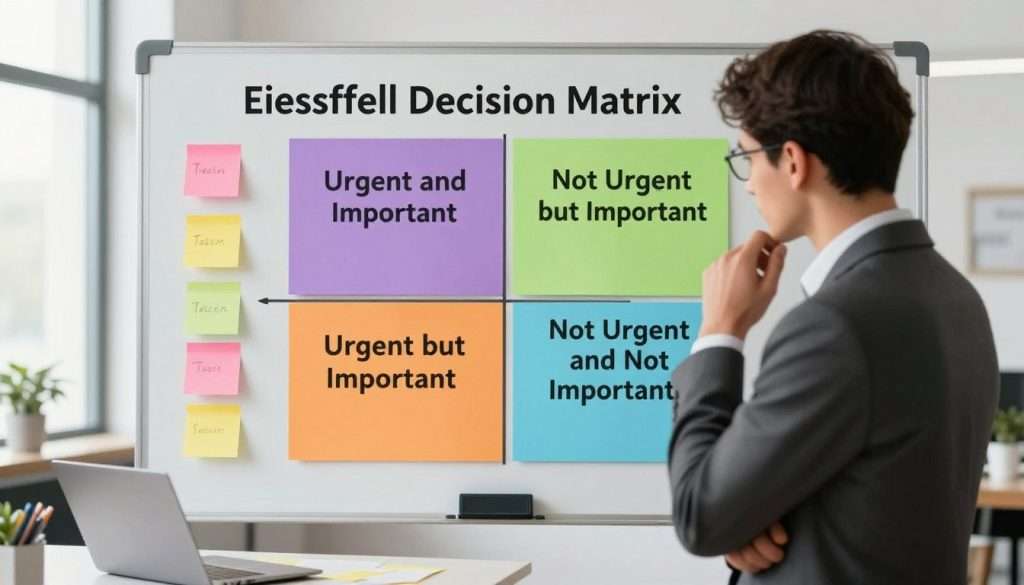
Meet the eisenhower decision matrix. This simple tool helps you sort urgent tasks from important ones. It was inspired by a famous general and turns chaos into four clear quadrants.
By focusing on what really matters, you can take back your schedule. For more, check out my free book How to Become the Smartest Student in the Classroom. Get your free copy here.
Key Takeaways
- Distinguish between urgent tasks and important goals to boost productivity.
- Use the four-quadrant system to organize your daily workload effectively.
- Stop reacting to every notification and start prioritizing deep work.
- Apply historical leadership strategies to modern student and professional life.
- Transform your messy to-do list into a clear, actionable plan.
Why the Eisenhower Decision Matrix Improves Focus
Ever feel overwhelmed by tasks that need your attention right away? It’s like you’re always fighting fires, but never getting closer to your big goals. This is because we often can’t tell what’s truly important from what’s just making a lot of noise.
Separate Urgency From Importance
Knowing the difference between urgent vs important is key to taking back your schedule. Urgent tasks demand your immediate attention, like a ringing phone or a tight deadline. These tasks keep you in a cycle of stress.
Important tasks, on the other hand, help you reach your long-term goals. They might include studying for a big exam, planning a project, or growing personally. Prioritizing these tasks sets you up for success, not just survival.
Reduce Decision Fatigue With a Clear Prioritization Method
Every day, we make many small choices that exhaust our mental energy. A good prioritization method saves you from this mental drain. The matrix helps you quickly sort tasks, focusing on what really matters.
With a clear system, you avoid feeling overwhelmed by your to-do list. You can see which tasks need your best effort. This clarity is crucial for anyone wanting to be productive, not just busy.
| Task Type | Characteristics | Best Action |
|---|---|---|
| Urgent & Important | Immediate deadlines, crises | Do it now |
| Important, Not Urgent | Long-term goals, planning | Schedule it |
| Urgent, Not Important | Interruptions, minor requests | Delegate it |
| Neither | Distractions, busy work | Eliminate it |
Use the Matrix for Work, School, and Everyday Responsibilities
The prioritization method works for everyone, from students to professionals to home managers. It helps you cut through daily distractions to find your focus.
Want to dive deeper into these strategies? My free book How to Become the Smartest Student in the Classroom offers a full system. It includes memory techniques, study routines, and effective strategies. Get your free copy here, no strings attached.
Understand the Four Quadrants of the Eisenhower Box
Learning to manage your time starts with the eisenhower box. This productivity framework helps you avoid being reactive and focus on what’s important. By sorting tasks into four categories—Do, Schedule, Delegate, and Delete—you can take charge of your day.
Quadrant One: Do Tasks That Are Urgent and Important
Examples of Deadlines, Emergencies, and Immediate Problems
These tasks need your immediate attention. Ignoring them can lead to serious problems. Think of a project deadline or a sudden health issue that needs fixing right away.
Quadrant Two: Schedule Tasks That Are Important but Not Urgent
Examples of Studying, Planning, Exercise, and Skill Building
This is where you grow in the long run. These tasks are crucial but don’t demand your immediate focus. Schedule these in your calendar to ensure they get done before they become urgent.
Quadrant Three: Delegate Tasks That Are Urgent but Not Important
How to Protect Your Time From Other People’s Priorities
Often, we get sidetracked by tasks that feel urgent but aren’t our priority. If someone asks for a favor that’s not your job, try to delegate it or say no. Keeping your time management in check helps you stay focused on what’s important.
Quadrant Four: Eliminate Tasks That Are Neither Urgent nor Important
Recognize Low-Value Distractions and Time Wasters
These tasks waste your energy without adding value. Think of scrolling through social media or unnecessary meetings. Simply delete these from your schedule to make room for meaningful work.
| Quadrant | Urgency | Importance | Action |
|---|---|---|---|
| One | High | High | Do |
| Two | Low | High | Schedule |
| Three | High | Low | Delegate |
| Four | Low | Low | Delete |
If this article struck a chord, check out my free book How to Become the Smartest Student in the Classroom. It offers memory techniques, study routines, and strategies that work. No cost, no catch. Get your free copy here.
Build Your Eisenhower Decision Matrix From a Real Task List
Ready to turn that chaotic pile of sticky notes into a real plan? First, you need to see the full picture of your commitments. Many people struggle because they try to organize tasks that are still floating around in their heads.
By getting everything out of your mind and onto paper, you create the foundation for effective task management. This simple act of clarity is the first step toward reclaiming your time.
Capture Every Open Task Before You Prioritize
Start by writing down every single thing you need to do. Don’t worry about the order or the importance just yet. Whether it is a massive project or a tiny errand, put it all on your list.
This brain dump ensures that nothing slips through the cracks. When you see your entire workload in one place, you stop feeling overwhelmed by the unknown.
Define What “Urgent” Means for Your Situation
Not every request that lands in your inbox deserves your immediate attention. To use the eisenhower decision matrix effectively, you must define urgency based on your reality. Ask yourself if a task has a hard deadline or if it will cause a major problem if ignored.
True urgency involves immediate consequences or blockers that stop your progress. If a task is just “loud” but not actually time-sensitive, it might not belong in your top priority box.
Identify Which Tasks Support Your Most Important Goals
Once you have your list, look for the items that actually move the needle on your long-term objectives. This is where your prioritization matrix becomes a tool for growth rather than just a way to stay busy.
Focus on tasks that align with your personal goals and responsibilities. If a task doesn’t help you get closer to where you want to be, it is likely a distraction in disguise.
Limit Each Quadrant to Keep the Matrix Actionable
It is tempting to cram everything into your boxes, but that is a recipe for stress. Try to keep each quadrant to about eight or ten items at most. This keeps your plan focused and prevents it from becoming a colorful storage closet for things you will never actually do.
If this article resonated with you, my free book How to Become the Smartest Student in the Classroom gives you a full system — memory techniques, study routines, and strategies that actually stick. No cost, no catch. Grab your free copy here.
Prioritize Tasks With the Urgent Versus Important Test
We often confuse a busy schedule with real progress. To take control, you need a good prioritization method. The urgent vs important test helps you focus on what truly matters.
Ask Whether a Task Has a Meaningful Consequence
Before starting a task, ask yourself: “What happens if I don’t do this today?” If it’s a big problem or a missed chance, it’s important. But if it’s just a small bother or guilt, it’s not as big a deal.
“The key is not to prioritize what’s on your schedule, but to schedule your priorities.”
Check Deadlines, Dependencies, and Time Sensitivity
Look at your tasks with a time lens. A task with a tight deadline is urgent. But does it help your long-term goals? We often let others’ deadlines control our day.
See if your task depends on someone else’s work. If it does, don’t wait. Move it to a waiting list so you can focus on what you can do now.
Move Misclassified Tasks Into the Correct Quadrant
It’s okay to change a task’s label. Maybe you thought it was urgent but it’s really distracting. It’s okay to move things around as you see the bigger picture.
This urgent vs important check is ongoing. As your day changes, keep adjusting your list to focus on what’s most important.
Choose the Right Action for Each Priority Category
After sorting tasks, plan how to tackle them. Here’s how to handle each category:
Do: Begin High-Impact Tasks Before They Become Crises
Start your top priorities early when you’re fresh. This prevents them from becoming stressful emergencies later.
Schedule: Reserve Time for Long-Term Progress
Don’t overlook important tasks without deadlines. Set aside specific times on your calendar for these goals.
Delegate: Transfer Suitable Tasks With Clear Expectations
If a task is urgent but not your area of expertise, delegate it. Be clear about what you need so the helper can do well without constant checks.
Delete: Remove Activities That Do Not Serve a Goal
Be strict with your time. If a task is not urgent or important, it’s just noise. Removing it is the best way to clear your mind.
If this article struck a chord, check out my free book How to Become the Smartest Student in the Classroom. It offers memory techniques, study routines, and strategies that work. No cost, no catch. Get your free copy here.
Apply the Time Management Matrix to Studying
Many students struggle because they treat every assignment as an emergency. This constant panic makes it hard for your brain to hold onto information. Using a time management matrix helps you focus on building knowledge instead of just reacting to emergencies.
Schedule Important Learning Before Exams Become Urgent
Success in school comes from studying before things get urgent. By planning your study sessions ahead of time, you avoid the stress of cramming. This way, you really learn the material, not just memorize it for a day.
Turn Large Assignments Into Manageable Study Blocks
Big projects can be overwhelming, leading to procrastination. Instead of getting stuck on a huge essay, break it down into smaller steps. Use the eisenhower box to organize your time and tackle each part in its own slot.
Handle Immediate Academic Problems Without Abandoning Long-Term Work
Deadlines and surprise quizzes can pop up suddenly. It’s tempting to drop everything else, but that hurts your long-term goals. Set aside a small, fixed time for urgent tasks while keeping up with your main study routine.
“The key is not to prioritize what’s on your schedule, but to schedule your priorities.”
Reduce Distractions That Feel Productive but Produce Little Progress
Spending hours on notes or organizing can feel like work but doesn’t help much. This is a common trap in time management. You need to tell the difference between busy work and real learning to make progress.
Separate Active Recall and Practice From Passive Review
Passive reading doesn’t work as well as testing yourself. Spend your time on active recall, like flashcards or practice problems, not just re-reading. This makes your study time more effective.
Use a Weekly Study Review to Update the Matrix
Every Sunday, take ten minutes to review your week. Update your eisenhower box with new deadlines and adjust your priorities. This simple habit keeps you in charge of your studies.
| Study Habit | Impact Level | Category |
|---|---|---|
| Active Recall | High | Important/Not Urgent |
| Highlighting Notes | Low | Not Important/Urgent |
| Cramming for Exams | Medium | Urgent/Important |
If this article spoke to you, check out my free book How to Become the Smartest Student in the Classroom. It offers memory techniques, study routines, and strategies that really work. No cost, no catch. Get your free copy here.
Turn Priorities Into Focused Daily Action
Going from a static list to a daily plan is where the magic is. You’ve organized your tasks, but now you need a decision-making tool to keep you moving. Let’s make your planning session turn into real daily work.
Choose a Small Number of Tasks to Complete Today
It’s easy to list everything you want to do, but it can be overwhelming. Pick just three to five important tasks. Focusing on a few tasks helps you finish what you start, avoiding half-done projects.
Time-Block Quadrant Two Work Before Reactive Tasks Take Over
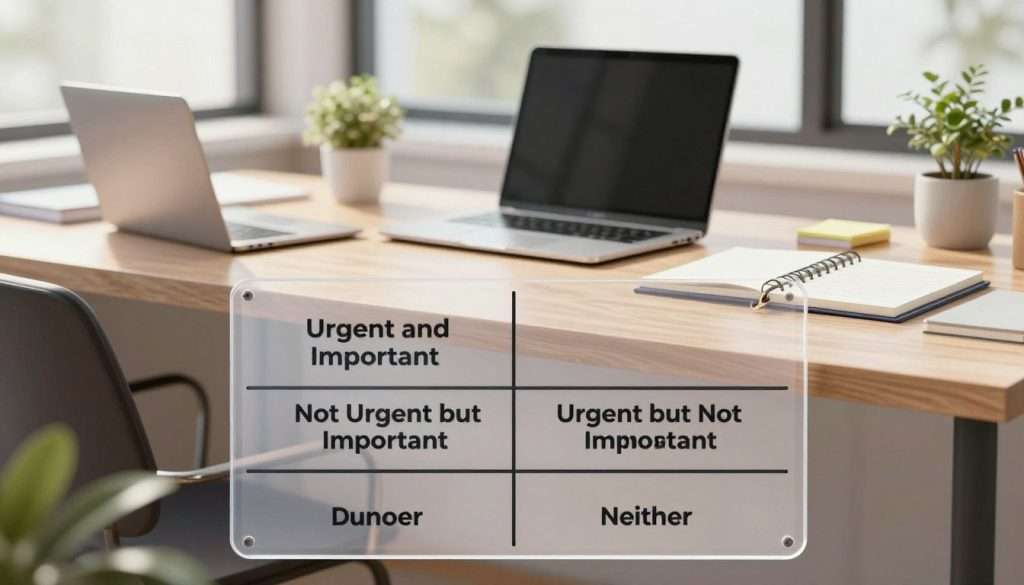
Your most important work is often in the “Important but Not Urgent” quadrant. Set aside 60-to-90 minutes for these tasks in the morning. This task management strategy ensures your long-term goals get attention before urgent tasks.
Match Task Difficulty to Your Energy and Attention
Not every hour is the same. Do your hardest work when you’re most alert, usually in the morning. Use less demanding times for admin tasks or simple follow-ups to keep your momentum.
Review Completed, Deferred, Delegated, and Deleted Tasks
At day’s end, take five minutes to review your tasks. This decision-making tool shows what you did versus what you delayed. It keeps your system clean and prevents mental clutter.
Use Calendar Blocks, Reminders, or a Paper Eisenhower Box
Choose a digital calendar or a notebook to make your next action clear. You don’t need a fancy task management app. Sometimes, a simple paper box is enough to stay focused without feeling trapped.
Protect Focus Sessions From Notifications and Context Switching
Your brain needs time to focus on complex tasks. Turn off notifications and close unnecessary tabs during your blocks. Protecting your focus helps you do more in less time.
If this article resonated with you, my free book How to Become the Smartest Student in the Classroom offers a full system. It includes memory techniques, study routines, and strategies that work. No cost, no catch. Get your free copy here → https://www.studyingmachine.com/free-books/.
Avoid Common Eisenhower Matrix Mistakes
Let’s talk about the sneaky mistakes that turn a great system into a source of stress. Even the most effective productivity framework can become a burden if you use it without a bit of common sense. We want to help you keep your workflow smooth and your mind clear.
Do Not Treat Every Request as Urgent
It is tempting to jump on every email or notification the moment it pops up. This is known as the mere-urgency effect, where quick tasks feel more important than they really are. Just because something is loud does not mean it deserves your immediate attention.
Do Not Confuse Importance With Personal Preference
Sometimes we prioritize tasks simply because we enjoy them more than the hard stuff. True importance is tied to your long-term goals, not just what feels fun in the moment. Be honest with yourself about what actually moves the needle.
Do Not Fill the Schedule With More Priorities Than It Can Hold
A time management matrix is not a bottomless pit for your to-do list. If you pack every quadrant with dozens of items, you will quickly feel overwhelmed. Keep your daily list short and realistic to maintain your momentum.
Do Not Use Delegation to Avoid Necessary Communication
Delegation is a powerful tool, but it is not an excuse to stop talking to your team or classmates. If you hand off a task, make sure you provide clear instructions and stay in the loop. Communication is the glue that keeps projects from falling apart.
Do Not Let the Matrix Become a Permanent To-Do List
If you never clear your list, your system will become a graveyard of forgotten tasks. Perform a weekly review to delete items that no longer matter. A clean list is a happy list!
| Common Mistake | The Better Habit | Why It Matters |
|---|---|---|
| Treating all pings as urgent | Batching notifications | Protects deep focus |
| Overloading the matrix | Limiting daily tasks | Prevents burnout |
| Ignoring old tasks | Weekly clearing | Keeps system fresh |
If this article resonated with you, my free book How to Become the Smartest Student in the Classroom gives you a full system — memory techniques, study routines, and strategies that actually stick. No cost, no catch. Grab your free copy here.
Strengthen Your Focus With a Complete Study System
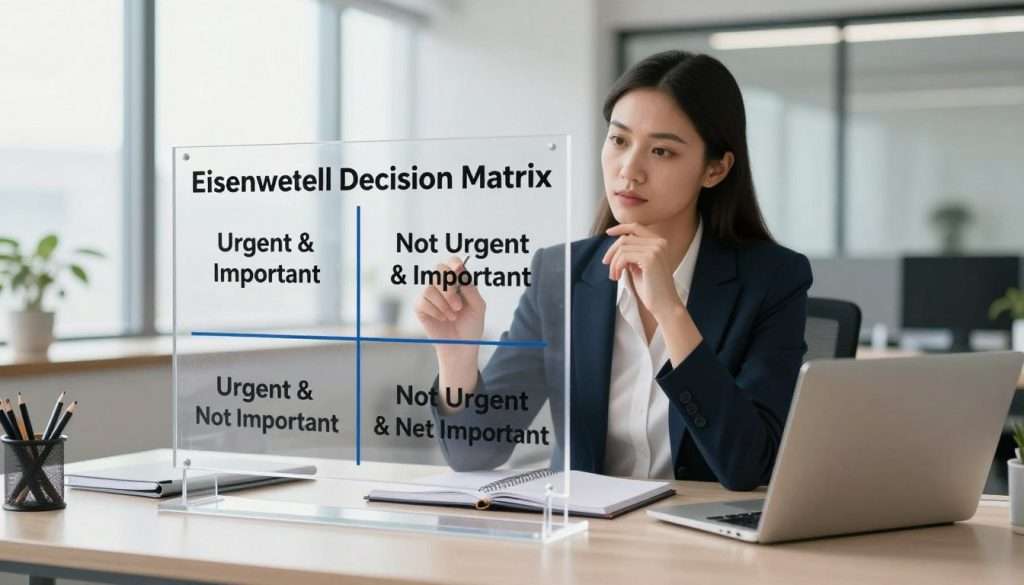
Creating a strong study system is more than just a list of tasks. The eisenhower decision matrix helps organize your day. But, real success comes from combining structure with smart learning habits.
Combine Prioritization With Memory Techniques
Mastering your prioritization matrix is just the start. Next, focus on how your brain stores information. Active recall and spaced repetition boost your learning. Study sessions become more efficient when you know what to focus on and how to remember it.
Build Study Routines That Actually Stick
Being consistent is key for students. Turn your tasks into routines to avoid mental blocks. Creating a rhythm helps you get into a flow state faster and stay there longer.
| Feature | Standard Approach | Our System |
|---|---|---|
| Task Management | Random To-Do Lists | Prioritization Matrix |
| Learning Style | Passive Reading | Active Recall |
| Routine | Sporadic Studying | Consistent Habits |
Get the Free Book How to Become the Smartest Student in the Classroom
Want to dive deeper? Our book, How to Become the Smartest Student in the Classroom, offers a complete framework for your studies. It helps you manage your time and energy without any costs.
What the Free Book Covers: Memory Techniques, Study Routines, and Practical Strategies
This guide explores methods used by top students. You’ll learn to improve your memory, develop strong study habits, and use practical strategies to make learning easy.
Call to Action: Grab Your Free Copy at https://www.studyingmachine.com/free-books/
Ready to improve? Get your free copy at https://www.studyingmachine.com/free-books/ now. There’s no catch or cost—just the tools you need to succeed.
Conclusion
You now have the power to manage your time well. Urgent tasks need your immediate focus, while important goals should always be on your schedule. You can also hand off the busy work and remove distractions from your day.
This method is most effective when you regularly check your matrix. Priorities change as deadlines near and new tasks come up. Stay focused by reviewing your quadrants every morning.
Want to dive deeper into these strategies? If this article struck a chord with you, my free book “How to Become the Smartest Student in the Classroom” offers a complete system. It includes memory tips, study routines, and effective strategies.
There’s no cost and no catch. Get your free copy here at https://www.studyingmachine.com/free-books/. Use this simple four-action system along with the book to improve your focus and memory for life.